


Biotechnological innovation: key to healthier soils and resilient agricultural production
On the World Day of Action Against Global Warming, we highlight the strategic role of biotechnology in promoting more sustainable and resilient agricultural systems aligned with the EU’s climate neutrality objectives.
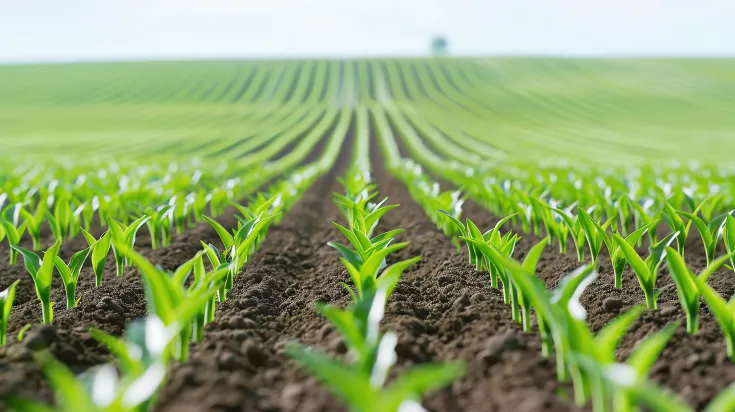
Every January 28, the world marks the World Day of Action Against Global Warming, a date aimed at raising awareness of the urgency to act on climate change and encouraging solutions that reduce environmental impact across all sectors. In this context, AseBio wishes to underscore the strategic role of biotechnology in promoting more sustainable and resilient agricultural systems aligned with the European Union’s climate neutrality goals, in light of the latest documents released by Brussels.
Recently, the European Union took a decisive step with the approval of European Directive (EU) 2025/2360 on soil monitoring and resilience, together with the EU Agricultural Outlook 2025–2035, which anticipates the evolution of the agricultural sector through 2035. These documents establish key indicators for soil health—such as microbial biodiversity, organic matter and the presence of emerging contaminants—and promote agricultural models with lower dependence on chemical inputs, greater sustainability and efficiency, in line with the objectives of the European Green Deal.
Although the European texts do not explicitly mention biotechnology, AseBio stresses that the biotechnology sector provides essential solutions to meet these objectives. Global challenges such as climate change, soil and ecosystem degradation, and global population growth require a determined shift toward a more sustainable economic model. This entails identifying and adopting new forms of production and consumption that respect the planet’s balance. In this context, the green transition positions itself as the necessary strategy for change.
Against this backdrop, the Spain 2050 Strategy highlights the fundamental role of biotechnological advances as key tools to address the effects of climate change, facilitate the green transition and improve quality of life. Biotechnology offers enormous transformative potential in terms of economic, social and environmental sustainability by optimizing the use of natural resources. This approach makes it possible to increase food production, develop new food sources and renewable materials, protect biodiversity and generate clean energy. Moreover, crop adaptation, efficient resource use and improved animal health are essential to sustainably meet growing food demand, consolidating biotechnology as a cornerstone of the green transition.
In this context, the report “Biotechnology Applied to the Green Transition” prepared by AseBio reveals that nearly 600 solutions are currently being developed in Spain by 86 member entities, focused on identifying and adopting new forms of production and consumption. Notably, 258 of these are directly related to the challenges identified by the European directive and report, distributed as follows:
- Bioprocesses: 109 solutions
- Regenerative agriculture: 87 solutions
- Bioproducts: 43 solutions
- Food innovation: 19 solutions
These tools enable soil health monitoring, optimization of agricultural production and reduction of environmental footprints, demonstrating that biotechnology not only accompanies the green transition but actively drives it.
Furthermore, public–private collaboration emerges as a key element in fostering Spanish and European innovation in the agri-food sector. The combination of robust policies, advanced technologies and sustainable agricultural practices provides farmers, companies and policymakers with a clear roadmap to address the challenges of climate change, ensuring safe, efficient and environmentally responsible production.
On the occasion of the World Day of Action Against Global Warming, we reaffirm that biotechnology is a strategic tool to improve soil health and move toward more sustainable, competitive and climate-neutral agriculture, proving that scientific innovation can translate into tangible benefits for society and the planet.