


#NewAseBioMember | "AseBio is, for us, a clear reference point within the Spanish biotech ecosystem. 25 years of building community and international reach speaks for itself"
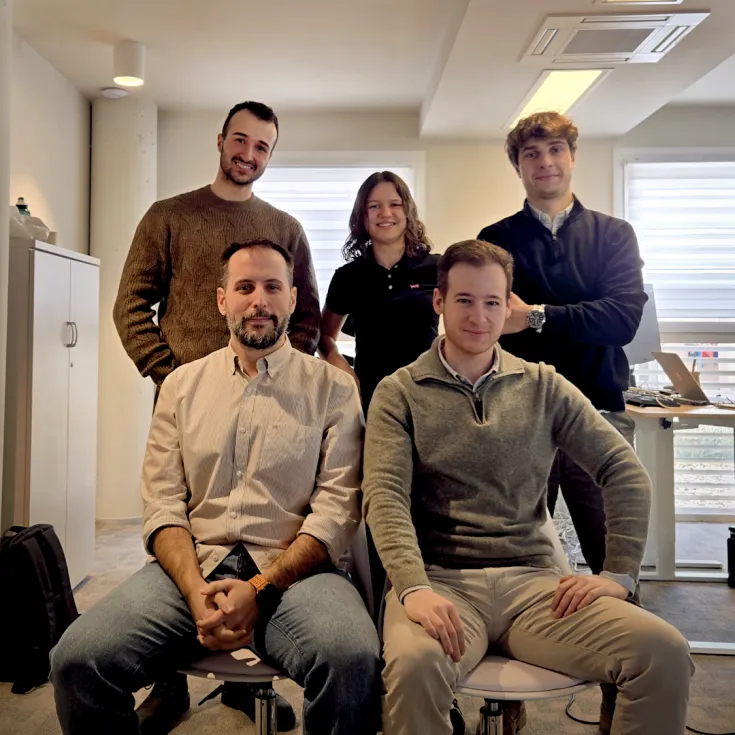
Meet PLOID AI, our new member. We spoke with Adolfo Gastalver Rubio and Federico Jurado Ruiz, CO-Founders.
AseBio. What does your company's work bring to the table and what is its strength?
Adolfo Gastalver Rubio and Federico Jurado Ruiz. At Ploid AI we are building an agentic AI platform aimed at making bioinformatics work easier. The idea is straightforward: a researcher describes their hypothesis in natural language, and the agent handles the operational side, data management, pipeline execution, and compute cluster configuration.
For researchers without a programming background, it offers a way into bioinformatic analysis. For bioinformaticians, it's a way to offload the more mechanical work and spend more time optimizing pipelines and on the scientific decisions that matter. Multi-omic analyses that currently take weeks can be resolved in hours with Ploid.
AseBio. What is AseBio for you?
Adolfo Gastalver Rubio and Federico Jurado Ruiz. AseBio is, for us, a clear reference point within the Spanish biotech ecosystem. 25 years of building community and international reach speaks for itself. Joining means, above all, the chance to listen, learn, and collaborate with those who have been shaping the sector for a long time.
AseBio. When did you first hear about AseBio?
Adolfo Gastalver Rubio and Federico Jurado Ruiz. Pretty much from day one, as soon as we started exploring the sector. It became clear early on that if we wanted to build something useful for Spanish biotech, AseBio was a natural stop along the way.
AseBio. What do you expect from being part of an association like AseBio?
Adolfo Gastalver Rubio and Federico Jurado Ruiz. First and foremost, we want to better understand the real needs of companies, laboratories, and research centers. Bioinformatics is built from practice and dialogue, and we want to get closer to the people working on it day to day to learn what works for them and what doesn't.
We would also like to share what we are learning about how agentic AI can fit into bioinformatic workflows, and to take part in sector conversations through the association's channels. More than belonging, we want to collaborate and contribute where we can be useful.
AseBio. What is the biggest challenge facing the biotech sector or your company?
Adolfo Gastalver Rubio and Federico Jurado Ruiz. The sector is dealing with a growing volume of multi-omic data (genomics, transcriptomics, proteomics, metabolomics), and traditional analytical infrastructure is starting to fall short. The bottleneck has shifted: it's less about generating data and more about interpreting it in time.
From there comes a challenge that is both technological and cultural. Agentic AI naturally raises reasonable questions around control and reproducibility, and we think part of the work is addressing them transparently and together with the scientific community. The goal is not to replace the researcher's judgment, but to free up execution time so it can go into asking better questions, designing better experiments, and making decisions with more context. If that shift happens, it will be gradual, and it will be built collectively.