


AseBio highlights the main regulatory challenges faced by the Spanish biotechnology sector at the 3rd Pharmaceutical Law Congress of ICAM
Sector-specific regulations, such as the revision of European pharmaceutical legislation, the IVDR and MDR Regulations, and the Health Technology Assessment Regulation, significantly impact biotechnology companies.
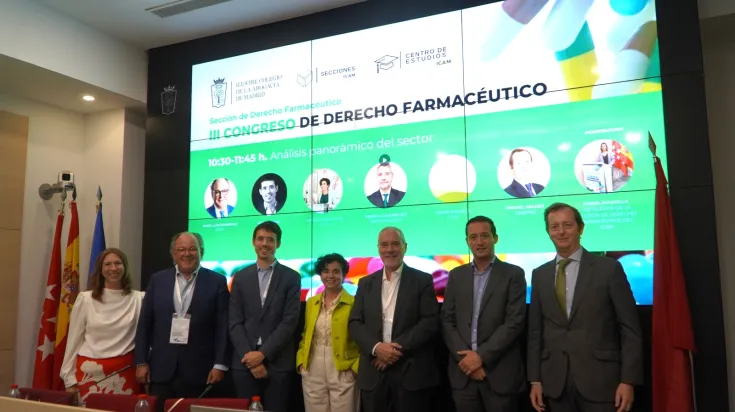
On September 19, the Madrid Bar Association held the 3rd Pharmaceutical Law Congress, now established as one of the most prominent events in the field of Pharmaceutical Law in Spain. The event was inaugurated by the Dean of ICAM, the Director-General of the Common Portfolio of Services of the National Health System (SNS) and Pharmacy, César Hernández, the Director-General of Inspection and Health Regulation of the Community of Madrid, the President of the Official College of Pharmacists of Madrid, and the President of the Pharmaceutical Law Section of ICAM. This year's focus was on analyzing the regulatory challenges facing the pharmaceutical sector.
In this context, Ion Arocena, CEO of AseBio, emphasized the importance of the biotechnology sector during a debate with representatives of the leading associations in the healthcare industry (Farmaindustria, FENIN, AESEG, Biosim, Fedifar). Biotechnology, amid events like the COVID-19 pandemic and the war in Ukraine, has emerged as a key technology for the strategic autonomy of the European Union. As a result, Brussels has identified biotechnology as a critical technology for the EU's economic security. Along these lines, Arocena referred to the recently published Draghi Report on competitiveness in Europe, which identified the pharmaceutical sector as one of the 10 key sectors for Europe, with particular attention to biological products, orphan drugs, and advanced therapy medicines.
Against this backdrop, AseBio’s CEO pointed out one of the main challenges: "the numerous sector-specific regulations affecting biotechnology companies." These regulations, although in different stages, "will set the rules for biotech companies both in Spain and Europe," such as the case of the revision of European pharmaceutical legislation.
The proposed European pharmaceutical legislation does not promote the competitiveness, innovation, and sustainability of the 'biotech' industry
"At AseBio, we believe that the goals outlined by the Commission in the revision make sense, and we share them," Arocena stated as a starting point for his presentation. "However, we believe that the Commission's proposal does not promote the competitiveness, innovation, and sustainability of the European biotechnology industry." He supported his argument by explaining that "the reduction of incentives for innovation and the excessive complexity of these incentives threatens the foundation of the European biotech innovation ecosystem, leading not only to fewer incentives but also to more uncertain ones."
He continued, explaining that "the ability of emerging biotech companies to finance their developments depends on their credibility with private investors, who naturally consider their return on investment, where the incentive framework is crucial." This is why he argued that any reduction in these incentives and doubts about their application "creates uncertainty that investors have to factor in." According to Arocena, this situation "threatens to make it more difficult for biotech companies, especially SMEs, to access the investment they need to develop products and bring them to patients."
Furthermore, the reduction of incentives "threatens to decrease the appeal of mature companies for early-stage technologies, making them less attractive. This is why we believe collaborations between large companies and innovative SMEs, one of the cornerstones of biopharmaceutical innovation, will be harmed."
The application of the IVDR and MDR Regulations faces numerous challenges
Continuing with the analysis of challenges, the focus turned to the IVDR and MDR Regulations. In this regard, Europe has taken a step forward with the new regulations to "establish a solid, transparent, sustainable, and internationally recognized regulatory framework that will improve clinical safety and create fair market access for manufacturers and healthcare professionals."
Arocena stated that this is a "positive step," but "we are seeing that the application of the regulations is facing challenges that threaten companies' ability to comply, patients' access to these products, and the viability of operators themselves." Regarding the certification and conformity assessment system, Arocena noted that "it does not have the quantitative capacity that the ecosystem needs." Based on this, he highlighted the reality in Spain, which still lacks a Notified Body for IVDR (the National Center for the Certification of Medical Devices began its application to be designated as a Notified Body under Regulation (EU) 2017/746 in July 2021, but has not yet achieved this), and is also awaiting the Royal Decree on in vitro diagnostics.
"SMEs are the most affected," Arocena asserted, adding that "at a time of excess demand and a lack of certification offerings from Notified Bodies, companies either cannot find a Notified Body to work with, face delays, or costs increase dramatically."
'The HTA system must not become a barrier or added difficulty'
AseBio’s CEO concluded his intervention by analyzing the Health Technology Assessment (HTA) Regulation. Currently, the Royal Decree that develops in national legislation the aspects left to the discretion of member states is in the hearing stage.
"For AseBio, it is very important that the efficiency assessment system for health technologies is efficient and navigable for small and medium-sized companies." Arocena’s overview revealed that emerging companies, such as biotech firms, are responsible for two-thirds of biomedical innovations, especially the most transformative ones.
"Although many of our innovations are co-developed, licensed, or co-commercialized by large companies, we believe that as our sector matures, biotech companies should also aspire to grow and bring their innovations to patients. Therefore, the HTA system must not become a barrier or added difficulty, but should be sensitive to the support needs of these companies," he emphasized, concluding that "we advocate for easier access to advisory consultations and a fee system that supports innovation made in Spain and by SMEs. We are finalizing our comments, which we will submit during the hearing process that is currently open."