


ZYMVOL raises €3 million in seed funding
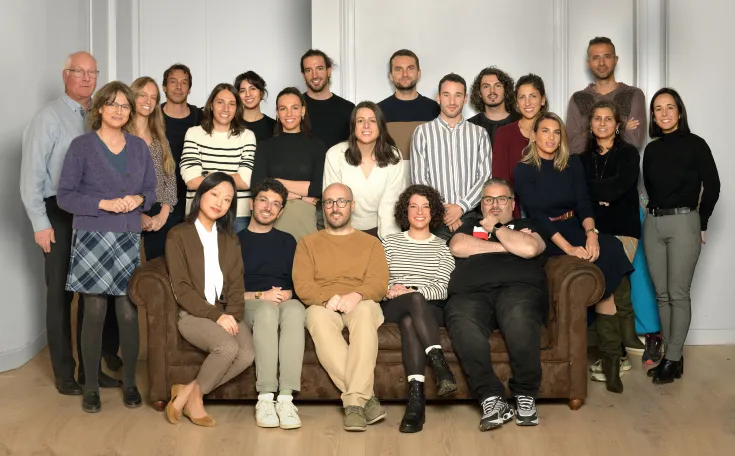
ZYMVOL, a biotech company on a mission to democratize the use of improved, sustainable enzymes throughout various industries, has raised seed funding of €3M led by VC firms Faber Ventures (lead investor), Elaia Partners (existing pre-seed investor), and Übermorgen Ventures.
Since its founding in 2017, ZYMVOL has established itself as a leader in computational enzyme discovery and design. The company partners with R&D teams from some of the world’s largest firms to transform their production processes—boosting innovation and reducing environmental impact—through tailored enzymatic solutions.
“Enzymes are tiny chemical factories that are responsible for all transformations in Nature. Zymvol is harnessing their power to deliver clean, sustainable chemical processes to companies striving to improve their products and operations—paving the way for a better world”, states Maria Fátima Lucas, CEO of ZYMVOL.
Over the years, ZYMVOL has successfully completed more than 100 projects spanning diverse sectors, primarily in the pharmaceutical and chemical industries, collaborating with global clients such as Axplora, Medichem, and Sanofi.
With a growing team of over 20 multidisciplinary employees and with offices both in Barcelona and Boston, the company is now ready for new challenges. Its ambitious plan includes enhancing its experimental lab (located at the Barcelona Science Park); expanding its proprietary computational technology; increasing its sales and marketing team to reach new clients; and bringing its first custom-made enzyme kits to the market.
"Enzymes power innovation across industries, from sustainable manufacturing to pharmaceutical breakthroughs. However, biocatalysis presents significant challenges —enzyme discovery and engineering remain complex, costly, and time-consuming.
Zymvol’s advanced computational solutions go beyond improving efficiency; they strengthen industrial resilience, drive sustainable innovation, and shape the future of global production.” states Sofia Santos, Partner at Faber Ventures.
“Over the past few years, Zymvol has revolutionised the way enzymes are discovered and engineered. Zymvol now outperforms alternative solutions across all key factors, including speed of development, specificity and efficiency. We are pleased to continue supporting the company as it expands its portfolio of enzymes and scales operations internationally.” said Sébastien Lefebvre, Partner at Elaia.
Simulating millions of experiments In Silico
Enzymes are biocatalysts, proteins naturally found in living organisms responsible for “catalyzing” (accelerating) millions of chemical reactions. For decades, various industries have used them to improve the properties of their products (e.g. detergents with better stain-removal power, lactose-free milk, etc), as well as to substitute polluting, traditional catalysts.
Despite an enzyme’s ability to be applied in industrial chemical processes, it must first be engineered to withstand the factory environment, as significant changes in pressure and temperature can render them useless. But traditional enzyme engineering often requires months or years of lab work, while relying on massive “trial and error” experiments, making it a rather unpredictable and expensive process.
ZYMVOL’s technology revolutionizes this process. The company uses highly realistic computer simulations that mimic the conditions of experiments with over 90% accuracy. This approach drastically reduces development time and cost, allowing only the most promising variants to proceed to lab testing.
Furthermore, the company is also able to discover enzymes for a target reaction without prior data. This means opening the door to potential projects that know which target chemical reaction they want to achieve, but don’t know there might be an enzyme for it.
The future is made of enzymes
If there’s one thing that enzymes are known for is their environmental friendliness. Applying a biocatalyst to an industrial process can eliminate -or decrease significantly- the need for toxic chemicals. And since it can operate at mild conditions, they can work at lower temperatures and pressure, which leads to energy savings.
“Many companies are facing pressure to maintain competitiveness in their respective fields, as well as adapt their processes to meet regulatory frameworks regarding sustainable manufacturing”, explains Maria Fátima. “The good thing about biocatalysts? They can provide a solution to all of these challenges”.
In fact, this trend doesn’t seem to slow down any time soon. According to MarketsandMarkets, the global enzyme market was estimated at USD 14B in 2024 and is projected to reach USD 20.4B by 2029 (7.8% CAGR).
“Biocatalysts have proven to be an effective solution in reducing emissions and harmful chemicals in industrial production, but they are still under-used due to the complexity of their implementation”, states Maria Fátima. “With ZYMVOL, we strive to make enzymes accessible to everyone, so green chemistry becomes the new norm”.