


BIOSPAIN 2026 explores the potential of new technologies to advance personalised medicine
- Smart biomaterials, advanced drug delivery systems and advanced therapies are opening up new possibilities for addressing complex diseases and tailoring treatments to the characteristics of each patient.
- Collaboration between biotechnology companies, research centres, hospitals, the pharmaceutical industry and health authorities has been identified as a key factor in accelerating the transfer of biomedical innovation.
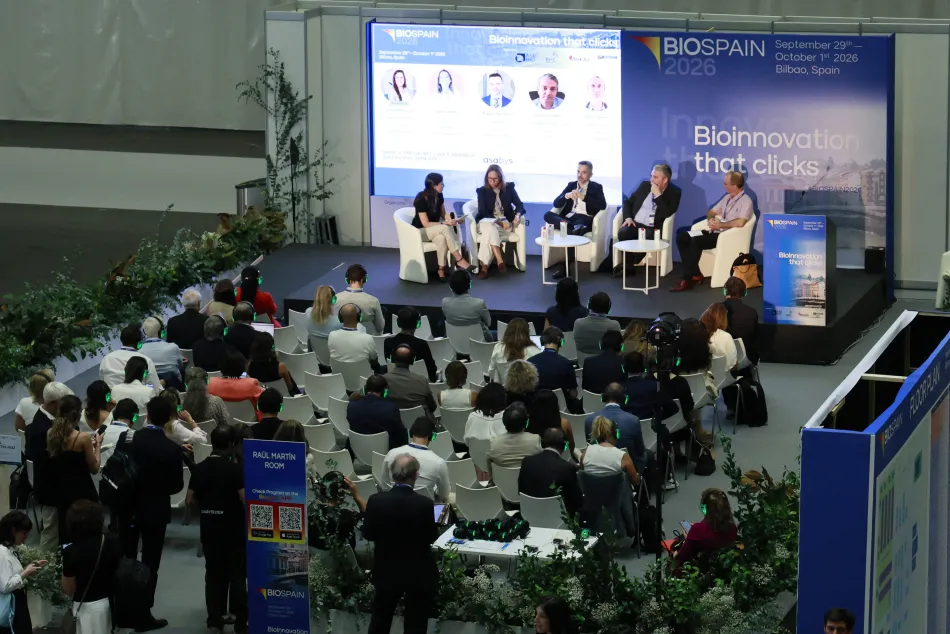
Bilbao, 30 September 2026. – BIOSPAIN 2026, taking place from 29 September to 1 October at the Bilbao Exhibition Centre (BEC) under the theme “Bioinnovation that clicks”, and organised by the Spanish Bioindustry Association (AseBio) in collaboration with the Provincial Council of Bizkaia, the Basque Government and the Basque Health Cluster (BHC), is focusing its second day on the opportunities offered by smart biomaterials, advanced drug delivery systems and advanced therapies to develop more precise treatments tailored to each patient.
The development of precision medicine requires not only new molecules and therapies, but also technologies capable of adapting their delivery to the needs of each patient. In this context, smart biomarkers and advanced systems make it possible to control where, when and how key active ingredients act, opening up new possibilities for improving treatment efficacy and reducing potential adverse effects.
For i+Med, the evolution of these technologies is particularly relevant to the development of personalised medicine. “The future of personalised medicine also depends on ensuring that treatments are tailored to the specific characteristics and needs of each patient. Controlled-release technologies make it possible to modulate where, when and how an active ingredient acts and, when combined with advanced diagnostic and monitoring tools, can contribute to designing increasingly individualised therapies,” says Amaia Huguet, director of R&D Operations at i+Med.
“In complex diseases, drug delivery technologies can play a decisive role in improving the performance of sophisticated treatments and helping them reach the tissue where they need to act. The challenge is to ensure that these solutions have a clear translational focus from the earliest stages of research and can be robustly validated during the preclinical and clinical stages,” Huguet adds.
For these innovations to progress, collaboration between the different players within the ecosystem is essential. Connecting biotechnology companies, research centres, hospitals and industry makes it possible to combine scientific knowledge, technological development and applied expertise, narrowing the gap between discovery and its use in patients.
Along this journey, the ability to develop and manufacture new therapies also takes on strategic importance. “The challenge does not end once the scientific potential of a therapy has been demonstrated. That knowledge needs to be translated into robust, reproducible and scalable processes that enable the product to be developed and manufactured efficiently. Collaboration between biotechnology companies, research centres, manufacturers and specialised partners from the early stages is essential to reduce risks and accelerate development,” explains Elena Erroba, Commercial director at 3PBIOVIAN.
Industrial capabilities also have a direct impact on project viability. A significant proportion of biotechnology companies’ costs are concentrated in the development and production stages, meaning that access to the right technologies and partners with manufacturing expertise can help optimise resources, reduce risks and establish efficient production plans.
In this regard, 3PBIOVIAN highlights the evolution of development and manufacturing organisations and the importance of choosing the right CDMO partner. CDMOs have moved beyond a role focused exclusively on production to become strategic partners for biotechnology companies. Their involvement from the earliest stages makes it possible to design processes with future scalability, validation and commercial production in mind, while also supporting projects through key development milestones.
“We believe that industrial capability is an essential element in accelerating the arrival of new therapies on the market. When science, technology and manufacturing progress in an integrated way, it is possible to reduce risks, optimise development timelines and bring innovation to patients more efficiently,” Erroba adds.
Once a therapy has been developed and validated, the challenge extends to ensuring its availability and supply capacity. This requires collaboration between industry, healthcare systems and public authorities, as well as assessment processes that enable innovations to be incorporated swiftly while maintaining guarantees of safety and sustainability.
The combination of advanced therapeutic technologies, new delivery systems, industrial capabilities and collaboration throughout the entire value chain therefore makes it possible to move towards more precise treatments tailored to each patient, while addressing the challenges involved in ensuring that these innovations can be developed, manufactured and ultimately reach those who need them.
Communications Director
AseBio and BIOSPAIN 2026
Ángel Luis Jiménez
+34 662 172 126
The Spanish Bioindustry Association (AseBio) brings together 350 organisations and represents Spain’s biotechnology sector as a whole. Its mission is to lead the country’s transformation by positioning science, innovation and biotechnology in particular as drivers of economic growth and social well-being. Its members include companies, associations, foundations, universities, technology centres and research centres whose activities are directly or indirectly related to biotechnology in Spain.
Sponsors Platinum
I+Med, sid
Sponsors Gold
3P BIOVIAN, Agilent, Ayuntamiento de Salamanca – Abioinnova, Guipuzkoa, HIPRA, Klinea, MSD, PNO Innovation, SOKAI, Xunta de Galicia.
Sponsors Silver
BeCytes, Bristol Myers Squibb, CDTI, Illumina, SEDA.
Sponsors Bronze
Alfa Laval, Almirall, Amgen, Asabys, BME, Cesif, CEU Universidad San Pablo, Clarke Modet, CSL, Faes Farma, Farmaindustria – Plataforma Medicamentos Innovadores, Plataforma Biotech, SILO, VIVE biotech.
Others Sponsors
Lonza, Palobiofarma, Universidad de Navarra.