


86 AseBio members working on new solutions to tackle the challenges of the Green Transition
- The report prepared by AseBio as an initiative of its Sustainability Committee identifies 587 solutions focused on identifying and adopting new ways of production and consumption that respect the planet’s balance.
- 33% of these solutions target areas such as animal health and nutrition, food safety, functional foods, fermentation or biocatalysis, and substance detection.
- Biotechnology in the green transition continues to face barriers at many levels. According to the findings, several factors currently hinder the shift toward a more sustainable system.
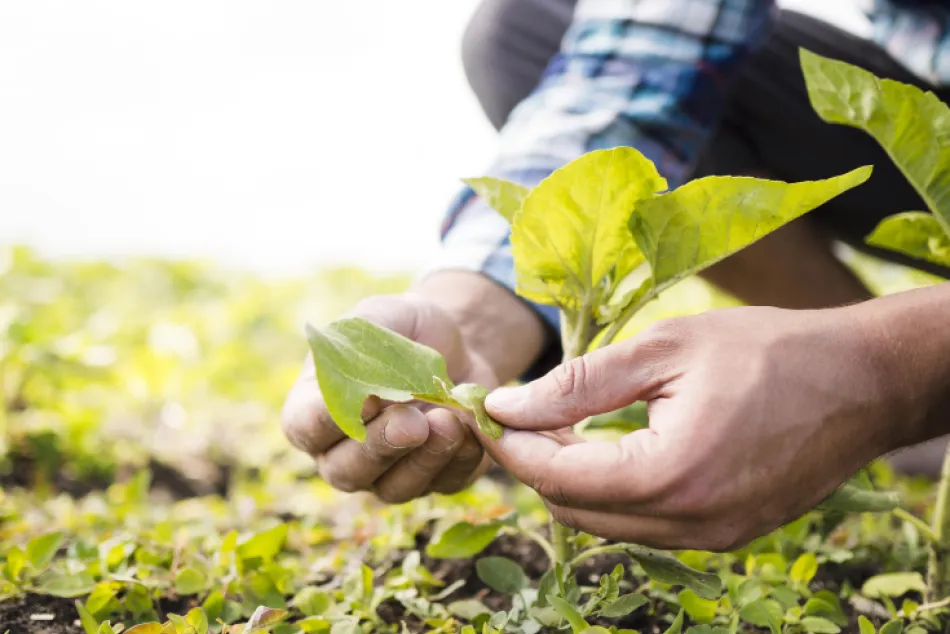
In the face of global challenges such as climate change, ecosystem degradation, and a growing world population, advancing toward a more sustainable economic model has become urgent. The green transition emerges as an essential roadmap to achieve this goal by promoting a lifestyle that respects the planet’s limits. In this context, the Spain 2050 Strategy highlights the key role of biotechnology as a driver of change, thanks to its ability to optimize the use of natural resources, promote more efficient and sustainable production, and improve quality of life.
Aware of the transformative potential of this technology, AseBio—through its Sustainability Committee—has developed the report titled “Biotechnology Applied to the Green Transition: Solutions for a Sustainable Economy.” This document outlines the solutions our member companies and entities are developing to support the ecological transition. It analyzes the key areas of action, their geographic distribution, the barriers they face, and the proposals to move toward a more sustainable future.
587 Solutions Focused on Identifying and Adopting New Forms of Production and Consumption
The report compiles contributions from 66 biotech companies and 20 public and private entities—including research centers, technology centers, and foundations—that are developing concrete solutions to drive the green transition in Spain. Together, these 86 organizations are implementing 587 solutions aimed at identifying and adopting new forms of production and consumption that respect the balance of the planet—one of the main challenges of the green transition.
The report identifies a total of 27 work areas grouped into four major categories. Of the 587 documented solutions, 34% are focused on food innovation. These are followed by bioprocesses (32%), sustainable agriculture (18%), and the bioproducts sector (16%).
Among the various solutions, one-third are specifically aimed at areas such as animal health and nutrition, food safety, functional foods, fermentation or biocatalysis, and substance detection. In this regard, the member organizations reporting the most diverse range of solutions include AINIA, present in 25 of the 27 activity areas identified in the report, followed by Leitat (23 out of 27), and both Tecnalia and the Center for Scientific and Technological Research of Extremadura (CICYTEX) (20 out of 27).
The geographical analysis reveals a clear concentration of activity: 50% of the organizations are located in Madrid and Catalonia, consolidating both regions as the main hubs of sustainability-oriented biotech innovation.
In terms of stakeholder profiles, SMEs account for 55% of the identified solutions, reflecting both their greater numbers and dynamism in the field. However, their specialization is significant: each SME works, on average, in 5 to 6 of the 27 thematic areas defined in the report.
On the other hand, technology centers stand out for their cross-cutting approach, offering solutions in an average of 19.5 out of the 27 analyzed areas, positioning them as key players in the development of technologies addressing multiple environmental challenges. They are followed by research centers, which are present in an average of 11 areas, underscoring their fundamental role in knowledge generation and technology transfer.
These findings reflect a diverse and complementary ecosystem where collaboration between companies and scientific institutions is essential to accelerate an effective and sustained ecological transition.
Biotechnology for the Green Transition Still Faces Major Regulatory, Financial, and Structural Barriers
From a regulatory standpoint, the lack of clear rules for new foods and biotech products—as well as a European regulatory framework focused more on hazard than on risk—limits access to key tools for sustainable and competitive agriculture. In addition, legal hurdles related to the use of by-products and waste impede the implementation of circular models, while administrative fragmentation and lack of awareness in health registration processes restrict market access. In parallel, current financial instruments show serious limitations, especially for SMEs, which struggle to access funding and face challenges in making investments during advanced stages of technology development—beyond seed capital.
In the innovation sphere, there are still shortcomings in R&D infrastructure, such as limited availability of pilot plants and restrictions on the long-term use of subsidized equipment, which hinder technology transfer. Moreover, there is a need to integrate multidisciplinary approaches to fully leverage digitalization and data accumulation in the agri-food ecosystem.
Additionally, a shortage of qualified talent—exacerbated by limited training opportunities in some regions and the difficulty of attracting professionals to rural areas—slows the deployment of innovative solutions.
Finally, a lack of public awareness and understanding of the benefits of biotechnology, along with a negative perception of innovation, affects political and regulatory decisions and hinders progress toward a more sustainable model.
To move decisively toward the green transition, AseBio advocates fostering strategic alliances between tech companies and the agricultural sector to accelerate the adoption of sustainable solutions. We believe it is essential to tailor financial instruments to the specific needs of rural areas, reduce the bureaucratic burden that hampers access to aid, and promote the use of by-products as a key resource in the circular economy.
We also support expanding access to regenerative agricultural tools, promoting technologies that integrate digital and ecological approaches, and strengthening industrial infrastructure through the creation of bioplants and biorefineries capable of transforming waste into new high-value products. These measures are crucial to achieving a more resilient, competitive, and environmentally respectful production system.
AseBio brings together 300 entities and represents the entire Spanish biotechnology sector. Its mission is to lead the transformation of the country by positioning science, innovation, and especially biotechnology as drivers of economic growth and social well-being. Among its members are companies, associations, foundations, universities, technology centers, and research institutions that directly or indirectly engage in biotechnology-related activities in Spain.