


The 2050 Challenge: A Shift In Food Production. LINNA®, Natural Intelligence Powered By Artificial Intelligence
Aiming to protect human health and the environment, Kimitec, has been researching and developing for the last 15 years natural solutions capable of replacing synthetic chemicals in food production
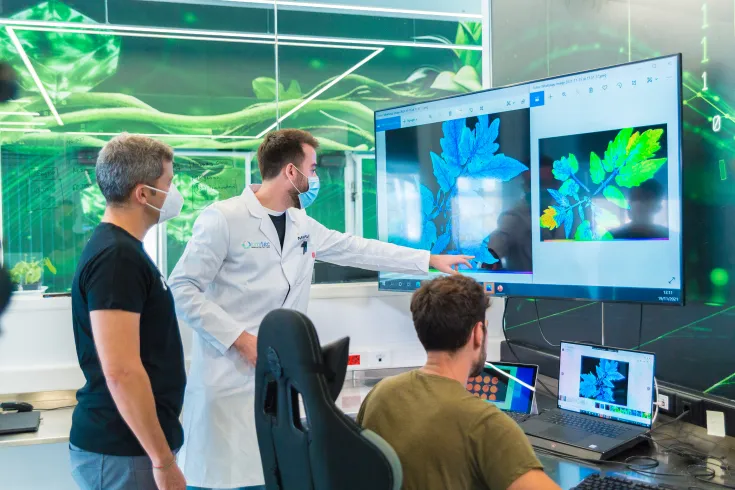
Aiming to protect human health and the environment, Kimitec, a biotechnology company focused on the agri-food sector, has been researching and developing for the last 15 years natural solutions capable of replacing synthetic chemicals in food production. As a pioneer in the field and based on their extensive knowledge of natural molecules and compounds obtained from botanical species and microorganisms, they have recently incorporated an Artificial Intelligence platform into their research model, which will allow them to accelerate the development of the natural, productive and sustainable solutions the industry demands, encouraged by the Green Deal and the Farm to Fork strategy.
The need to transform our food production system in order to turn Europe into the first climate-neutral continent in 2050, with a first, short-term goal in 2030, will define the future of the entire industry, which will need to change overnight the way it has been working for decades.
In that context, Kimitec and its MAAVi Innovation Center, the largest biotechnology center dedicated to natural agriculture in Europe and one of the largest technology hubs in the world, incorporate LINNA®, their Artificial Intelligence platform that will help to replace compounds obtained through synthetic chemistry with natural compounds in a fast, effective and sustainable manner. There is still a lot to do, since only 1% of all natural compounds and molecules are currently known and studied in science; but that only means that we still have a path full of opportunities for the discovery and application of the remaining 99% of unknown compounds.
LINNA® leads the change.
Built upon their extensive knowledge in the field of Natural Intelligence after 15 years of research, LINNA® will help to gather important data for the development of MAAVi’s natural solutions. Those data, based on their accumulated knowledge, will be analyzed with the help of omic sciences, such as the analysis of chemical profiles to provide characterized data on the potential of natural compounds and molecules; phenotyping to provide information on the external, visible traits of plants that result from the interaction between environmental factors and plant genotypes; and transcriptomics to provide information on the portion of genome that is transcribed in each cell type depending on certain conditions.
This “brain”, full of information, will be continuously learning, generating collective knowledge, minimizing research times, increasing the accumulated knowledge and, most importantly, reducing the margin of error by promoting a faster and more accurate transition to natural molecules and compounds, with the aim to replace pesticides with biopesticides, and artificial preservatives with natural preservatives, as well as to find new sources of protein for food production and even alternatives to synthetic antibiotics in livestock farming and aquaculture. This biotech has currently 50 ongoing projects, among which we could highlight their bioherbicide platform to replace the well-known and increasingly unpopular glyphosate, a project with Nueva Pescanova to improve the health of farmed fish, or a specific consortium of microorganisms to improve the organoleptic and chemopreventive properties of tomatoes.
MAAVi’s R&D&i team is made up of over 70 professionals, who work in full scientific and technological synergy with Natural Intelligence, Artificial Intelligence, “Big Data” and supercomputing. Because that is what LINNA® is about: Trying to maximize the potential of Natural Intelligence by finding non-obvious realities with the help of technology, in order to promote competitiveness and productivity in the food system with natural solutions that are friendly to the environment and human health, and ensure an economically viable transition. In short: “Making things happen”.