


An example of collaboration to catch pancreatic cancer as early as possible
Amadix, IOMED and NorayBio have joined forces to develop a predictive algorithm for mass data analysis to reduce the mortality rate of this disease
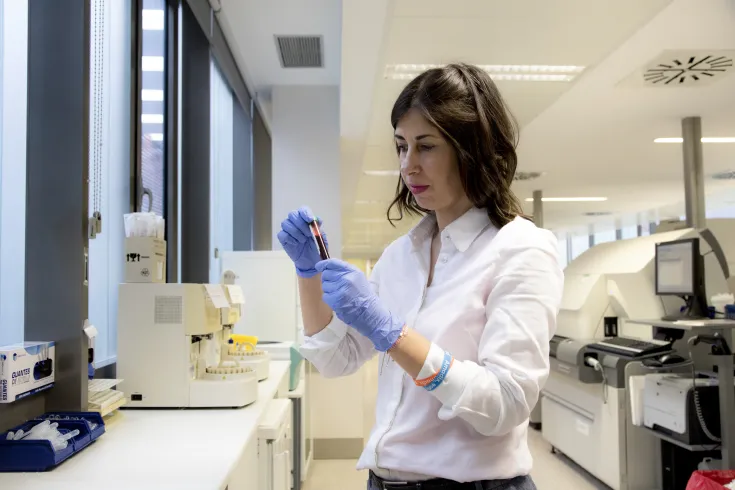
Pancreatic cancer takes more than 100,000 lives each year in Europe alone and is the fourth most deadly cancer, with a five-year survival rate under 10%. Plus, estimates show it will overtake prostate, colon and breast cancer by 2030 as the second-largest cause of cancer deaths. “Early diagnostic tools are essential to lowering the high mortality rate we see today,” explains Rocío Arroyo, founder and CEO of Amadix, a leading company in molecular diagnostics that is developing and marketing innovative tests to catch cancer early in order to increase patients’ chance of survival and improve their quality of life.
One: an innovative idea
Amadix has got down to work and kicked off the project titled “Digital platform to manage clinical data analysed with artificial intelligence/big data to detect cancer early” with NorayBio, IOMED and AseBio as the AEI (Agrupación Empresarial Innovadora or Innovative Business Association). “This project will allow us to identify risk factors for pancreatic cancer early using artificial intelligence tools,” notes Arroyo.
This project -with support from the AEI programme run by the Spanish Ministry of Industry, Trade and Tourism with funds from the Recovery and Resilience Facility- will allow Amadix to continue advancing development of its diagnostic tools based on mass data analysis to further personalisation in diagnostics and better identify patients.
Two: network of contacts with access to data
But this goal would be impossible to achieve without the collaboration that came about thanks to the community built by AseBio. Álvaro Abella, co-founder and CSO of IOMED, is clear on this, “Separately, none of the three companies has the capacity to carry out this project, but together we have all the pillars it needs: access to standardised clinical data and a network of hospitals (IOMED), the know-how and software necessary to process samples (NorayBio), and the scientific leadership and ability to develop predictive systems (Amadix).” From the expert’s point of view, the project’s greatest strength lies in the synergy of the three organisations and how they complement each other technically and strategically. As he explains, it is hard for one project to get such widespread access to data.
IOMED has a network of collaborating hospitals and their data is standardised and handled using natural language processing. “Thanks to this existing network and the IOMED platform, once one or several hospitals decide to join the project, managing clinical data will be much faster,” he believes.
Three: software to receive, process and improve information
The final link in the chain, but no less important, is NorayBio, with 20 years of experience as a technological support company for the life sciences. In fact, the company was part of the project even before it saw the light in late 2022. Amadix was interested in sample-management products and NorayBio had a specific proposal for software to receive all the information generated and enrich it. “We’ve gone from a purely commercial relationship to one based on product development. Now there are several options to improve and bring additional functions to the product,” explains NorayBio Business Development Director, Marta Acilu.

NorayBio’s top priority is to explore ways to promote integration with IOMED. The biggest challenge they are facing: patient privacy. “This is something new for us. It’s a critical factor,” explains Imanol Carnero, director of the NorayBanks Unit and project leader.
A common goal: accelerate projects and develop predictive solutions
Both NorayBio and IOMED are sure this project will be key to developing new solutions for clinical use. “There is a huge amount of digitalised clinical data today and we have the technical capacity to process it. We see a bright future ahead, where our platform can help accelerate clinical research projects and develop much-needed solutions like this predictive system,” affirms Abella. “The digital tool is open to any model. We want to create a usage model, software to manage data from the biosciences sector that can be applied to any disease or market need,” adds Acilu.
#WorldCancerDay #4February2023
#WeAreBiotechnology
#WeAreScience
#WeAreIndustry