How advanced diagnostics are accelerating the fight against cancer
AseBio brings together a dozen experts at ISCIII to discuss the potential of genomics in precision medicine to improve the treatment of patients
Cancer is probably one of the biggest pandemics that humanity has ever faced, and it is the world's leading cause of death. More than 19 million new cases were detected in 2020, and the figure is expected to rise to 30 million in less than 20 years. That is an increase of more than 56% in diagnostic needs in oncology. How can our system respond to this enormous healthcare challenge? The answer lies in the detail - in what we today call precision personalised medicine.
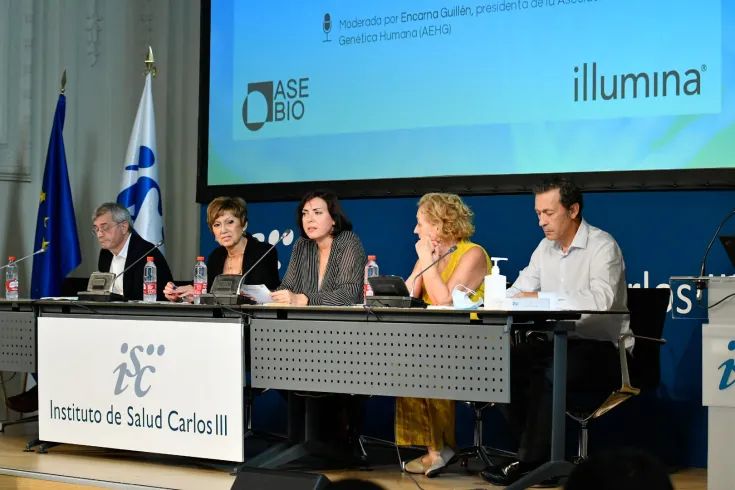
A dozen experts met last week at the Carlos III Health Institute (ISCIII) to discuss the potential of genomics for improving the diagnosis and treatment of the constantly increasing patients, at a conference organised by AseBio and Illumina.
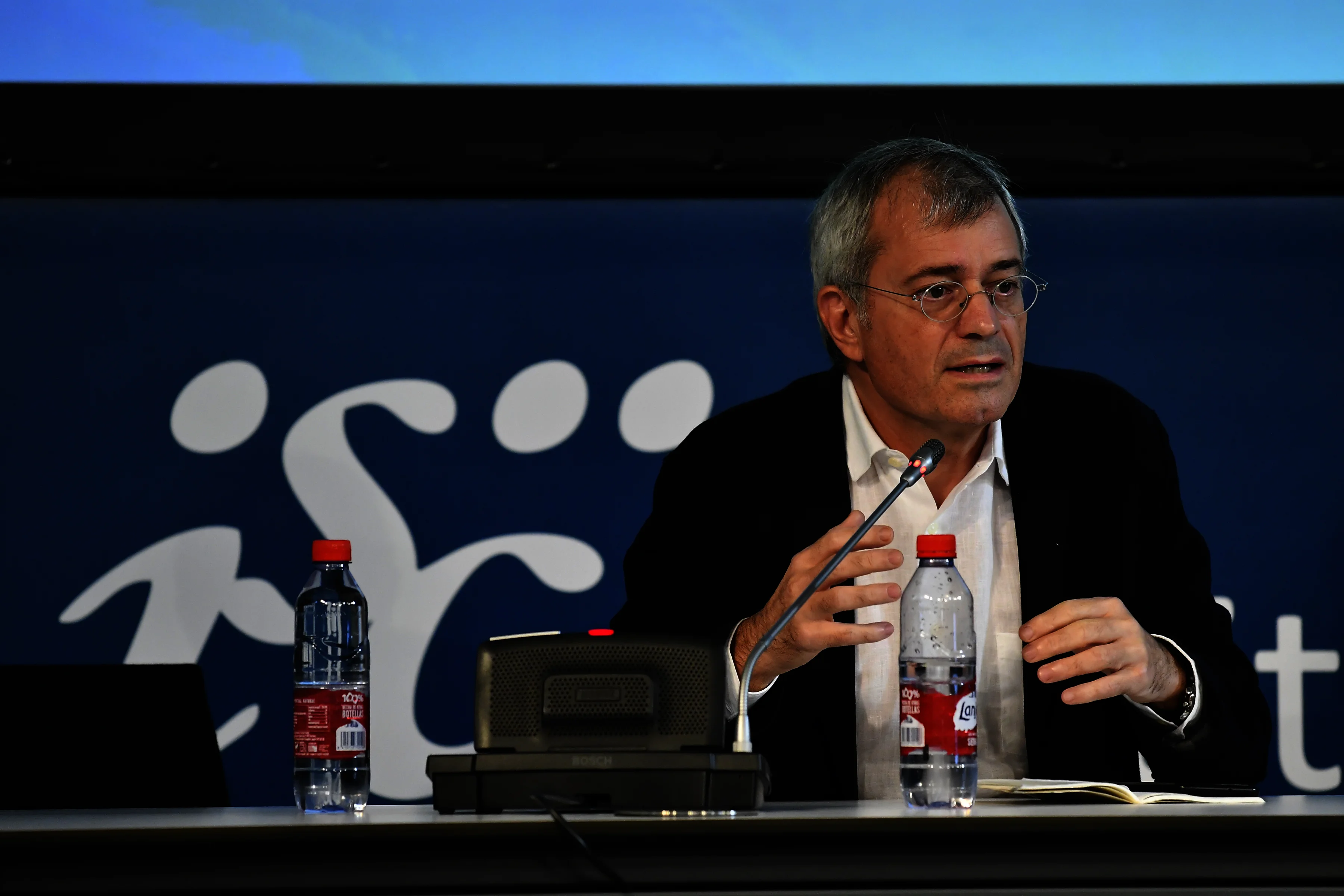
The first phase, as argued by Josep Borras, coordinator of the Cancer Strategy of the Spanish National Health System (SNS) and the director of the Oncology Plan in Catalonia's Precision Oncology Programme, is to accept that the disease involves a vast spectrum of molecular alterations which all have to be included in the clinical process. "We have to define the genomic panels, integrate them all into the SNS and establish a tracing system. Scientific knowledge is changing rapidly, and we have to try to keep pace with it," he explains.
A repository of valuable shared information
How do we do it? The expert proposes improvements to the healthcare model in three basic areas. The first is to establish a scientific committee which is able to examine the scientific evidence for the different biomarkers, and build these panels. The second is to create reference centres established based on quality criteria that hospitals can use. And finally, all this information, which is sacred for science in general and oncology in particular, must be stored in repositories in an orderly and systematic manner. "It must be a source of knowledge for the future, and the quality criteria must be the same for the entire healthcare system to ensure all the patients are treated the same," emphasizes Borras. In short, we all have to be connected to the same source of information.
For precision diagnosis before treatment
Patients arriving at a hospital must be examined and diagnosed with the highest possible levels of precision. "There is an overwhelming diversity in access to molecular diagnostics," according to Luis Paz-Ares, head of the Medical Oncology Service at University Hospital 12 de Octubre in Madrid. "It differs widely depending on the autonomous region of Spain where you live, and within that, depending on the hospital as well," he adds. Although progress has been made in many of Spain's regions, Paz-Ares insists that it is absurd for a drug to be approved as a result of clinical trials and experience that endorse its use, but for it not to reach the patient because we have been unable to determine their disease, or we do not know its underlying "genomic aberration". "I can say from my own experience that it is much easier to increase a department's funding for a treatment by one million Euros than to increase it for molecular diagnosis by 100,000 Euros," he argues. But if we do not have the right diagnosis, how can we guide treatment?
In better equipped hospitals
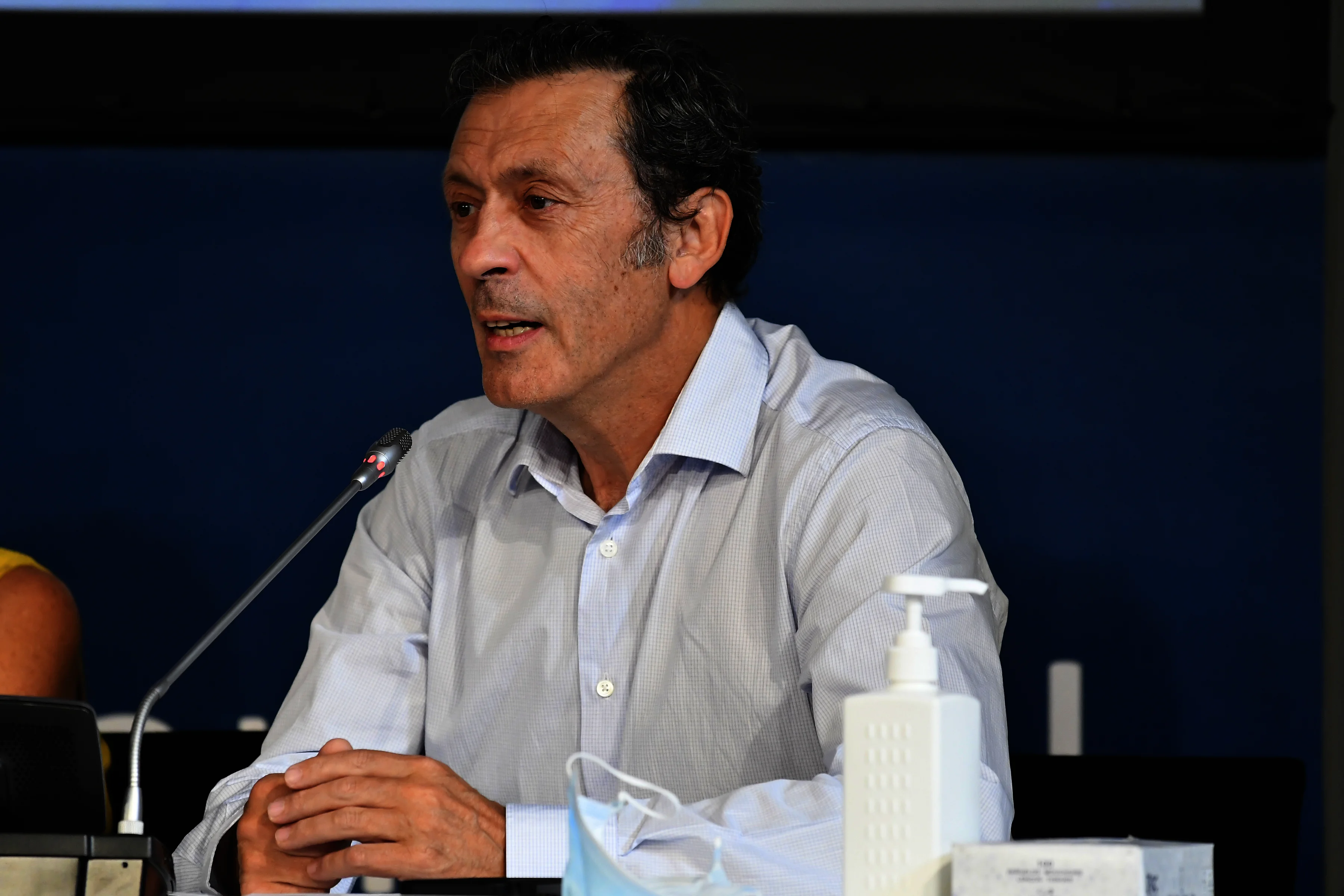
Another challenge that arises after all these steps is knowing how to use this innovation in hospitals. Paz Ares says that according to an internal survey by the Spanish Society of Medical Oncology (SEOM) and based on a generous estimate of the situation, only 40% of Spain's treatment services and centres have more advanced technologies such as molecular diagnosis, and each centre's capacities do not cover all types of tumours. "Access is still very limited, but it is true that there is some movement. At hospitals we have to acknowledge that we need more technological infrastructure and expertise, and that this is going to lead to changes, money and centralised models, but above all we need to train professionals and we have to do it well," says the expert, who also goes on to acknowledge that bioinformaticians and geneticists are not yet recognised as specialist fields in the Spanish healthcare system.
Thanks to solid and sustained funding
Rosario Perona, the Deputy Director General of Research Assessment and Promotion at the ISCIII, recalled that in order to make progress in this area funding of €30 million was received for personalised medicine projects, with a view to directly implementing all this knowledge in the Spanish National Health System. Six different autonomous regions had to be involved in each grant: "that encouraged territorial fairness." More resources are proposed this year, with a significant increase in the amount to €81.5 million. "Cooperation with industry is important to us, so that there is a company behind it that can take the research forward to the patent stage," she says. As ISCIII spokesperson, she believes that the most promising tool that has reached the ecosystem to treat cancer has been CAR-T therapies.
And close cooperation
The importance of collaboration with business is an issue raised several times by the oncologists. There is talk of an industrialisation of clinical diagnostics and scalability of the innovations that are under way in laboratories. "Continuous development is taking place in Europe, and we must understand that on this boat we must all row in the same direction together," says Jesús Garcia Foncillas, director of the Oncology Institute at the University Hospital Jiménez Díaz Foundation. "We have to move beyond the clinical setting, so that all patients have access to it," he points out. In addition, he says that when this selection is made, joining forces and knowledge, thanks to precision medicine, the SNS will save resources because correct instructions are used for a specific patient: "we need to be increasingly subtle."
The phrase that concluded this breakfast was a perfect summary of the sector's needs and of the mentality that all agents will have to adopt in order to take the SNS forward and consolidate its position: "If you want to go fast, go alone, if you want to go far, go together." In short, we need uniformity and collaboration. The pandemic taught us that both aspects helped us overcome the greatest health crisis in modern history.
At AseBio we are committed to advanced diagnosis, and we work on it every day in our Personalised Medicine and Advanced Diagnosis Working Group, coordinated by Rocío Arroyo, CEO of Amadix.