


#InterviewBiospain2021 | "Biospain should be an inspiring event that motivates emerging biotechs"
We spoke with Karen Wagner, General Partner of Ysios Capital, Gold sponsor de Biospain 2021, about our international benchmark event and the strengths and weaknesses of the Spanish biotech sector
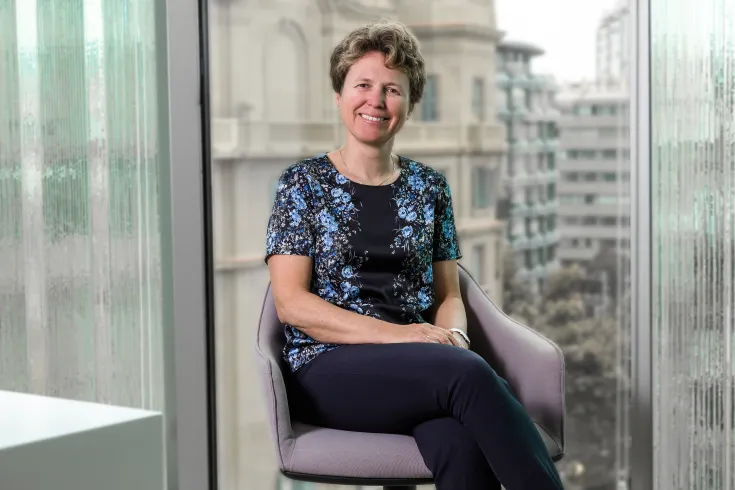
Ysios Capital, Gold Sponsor de Biospain 2021, invests in only 2% of all the companies they see and only when it comes to innovative therapies. Ysios has brought 14 medical products from the lab to market and invested more than €1.000 M in therapeutic R&D. "We have a very strong filter," says Karen Wagner, general partner of the venture capital fund. But what does a company need for Ysios to bet on it? Throughout the interview with AseBio, the German expert repeats some key words that represent, in part and from her point of view, the Spanish biotech sector: "strong science", but with a "lack of funding". How does Ysios work to make a Spanish biotech company more successful? Let's go step by step...
AseBio. First, what advantages do we have to grow?
Karen Wagner. Many... Strong science (as demonstrated by number of publications and university funding awards from ERC), very good hospitals with a lot of experience in clinical trials, reknown international business schools, and, although we have smaller companies than abroad, we have more cash-efficient operations.
Asebio. Supported by these strengths you mention, what are the challenges we need to start working on?
Karen Wagner. Biotechnology in Spain is still emerging, it is not yet very established. I think there is a lack of serial entrepreneurs, ie people who have successfully started up companies, raised money, sold their company, and started the scheme all over again. I also see that there is a low level of R&D because we don't have large established companies, like Switzerland where the talent from large companies such as Novartis and Roche can benefit smaller and local companies.
On the other hand, Spanish biotech hubs are also not as well-funded and well-resourced as in other neighbouring countries; for example Denmark which has incubators with multi-million funds that allow new projects to be launched. Some Spanish projects are not ambitious enough vs global competition because they are planned with so few resources that they cannot differentiate themselves.
In short, we need more established hubs, more funding from the start, more technology transfer, and more investment in infrastructure. We must not lose innovation. We urgently need to reverse this trend.
"This new generation of technology can be a key element that attracts investors and an opportunity for the industry to reinvent itself and continue to grow"
AseBio: Do you think that Biospain 2021 can help to reverse this trend?
Karen Wagner. Without a doubt, it is a key event for the sector. It allows us to build relationships, face to face, find out what is happening in the Spanish ecosystem, connect with companies, investors... It is also a forum where, in addition to problem solving, it is important to talk about successes, about innovations, about those companies that have managed to reach the final stage of development, about those great entrepreneurs who have managed to raise international funding and reach the global market. Biospain 2021 should be an inspiring and motivating event for all those who are just starting out.
AseBio. At Ysios, how do you work to help these new companies to achieve all this?
Karen Wagner. There are several topics... I would say first: financing them properly. We have examples at Ysios such as Minoryx Therapeutics which raised 50 million, or Sanifit Therapeutics which raised more than 100 million...
Then, another important point is to have the opportunity to take them public because that is the only way to make them sustainable in the long term. From Ysios, we have managed to take five of our companies to NASDAQ. But we must do it more, it is fundamental. Here we should have something similar, a stock exchange in Europe, like NASDAQ, to take a company public and drive its internationalisation...
Furthermore, in Spain we should reduce administrative and tax barriers, to make it easier to license assets from universities and to make it more attractive for international talent to move to Spain (but sometimes, headquarters abroad are also very important for companies to compete globally and have visibility)
AseBio. Well... with the pandemic, the Spanish biotech sector has managed to increase its investment by 50%, attract more foreign investors and grow at a global level…
Karen Wagner. Well... Obviously. The covid-19 crisis showed that biotechnology is contributing to improving people's lives and that it is a good sector to invest in. We have seen that the pandemic has attracted both specialist and non-specialist investors, national and international. The sector has benefited greatly.
AseBio: What can we do to maintain this interest in our sector beyond the pandemic?
Karen Wagner. It's true that all the focus is on covid-19, but I think it has awakened interest in vaccines in general and there is a lot of investment there. New technologies and tools such as messenger RNA or CRISPR, which allow us to work on diseases that have not yet been cured, are leading to exponential growth in the sector. This new generation of technology can be a key element that attracts investors and an opportunity for the industry to reinvent itself and continue to grow.
By Agathe Cortes