


ORYZON announces FDA approval of IND for FRIDA, a Phase Ib trial with iadademstat in R/R AML FLT3mut+ patients
- In combination with gilteritinib
- Primary objectives: to assess safety, tolerability and RP2D
- Secondary objectives: to assess efficacy
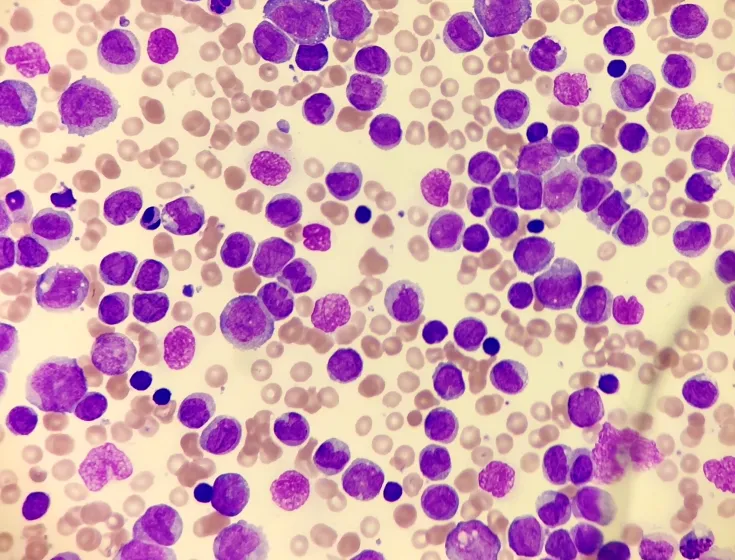
Oryzon Genomics, S.A. (ISIN Code: ES0167733015, ORY), a clinical-stage biopharmaceutical company leveraging epigenetics to develop therapies in diseases with strong unmet medical needs, announced today that it has received notification from the U.S. Food and Drug Administration (FDA) that its Investigational New Drug application (IND) for iadademstat is now approved to initiate a Phase Ib clinical trial in patients with relapsed/refractory Acute Myeloid Leukemia (AML) harboring a FMS-like tyrosine kinase mutation (FLT3mut+).
FRIDA is an open-label, multicenter study of iadademstat plus gilteritinib for the treatment of patients with relapsed or refractory AML (R/R AML) with FLT3·mutations. The trial has as its primary objectives to evaluate the safety and tolerability of iadademstat in combination with gilteritinib in patients with FLT3mut+ R/R AML and to establish the Recommended Phase 2 Dose (RP2D) for this combination. Secondary objectives include evaluation of the treatment efficacy, measured as the rate of complete remission and complete remission with partial hematological recovery (CR/CRh), the Duration of Responses (DoR) and the assessment of Measurable Residual Disease. FRIDA will be conducted in 10-15 sites in the US. The study will accrue up to approximately 45 patients and if successful, the Company and FDA have agreed to hold a meeting to discuss the best plan to further develop this combination in this much in need AML population.
Dr. Carlos Buesa, President and CEO of Oryzon, said: “FDA’s clearance to start FRIDA is a relevant corporate milestone for Oryzon and the patients we hope to serve. It also represents our new development strategy for iadademstat in hemato-oncology and solid tumors, which is going to gravitate mostly in US clinical activities and where FRIDA is the first step.”
Dr. Ana Limon, Senior VP of Clinical Development and Global Medical Affairs of Oryzon said: “Epigenetics is emerging as one of the underlying roots of leukemia and other cancers. LSD1 is a key target in this space. Iadademstat, a uniquely potent and selective LSD1 inhibitor, has already shown a safe profile and high and prolonged responses in AML patients in combination with azacitidine. Iadademstat’s excellent pharmacologic properties and synergy with Flt3 inhibitors make this study a very solid proposition for the treatment of this relapsed/refractory patient population. At Oryzon, we are thrilled to pioneer this momentum in creating next-generation medicines.”
FRIDA’s scientific rationale is based on iadademstat’s ability to inhibit the lysine specific demethylase 1 (LSD1), thereby triggering a powerful differentiating effect in hematologic cancers, as well as producing an anti-leukemic effect by targeting leukemic stem cells. Furthermore, the combination of iadademstat with gilteritinib demonstrated a very strong synergy in FLT3·mut+ AML preclinical models. This together with the fact that iadademstat has been administered to more than 100 cancer patients (including AML patients) demonstrating a good safety profile, activity and excellent pharmacologic properties supports exploring its combination with FLT3 inhibitors in FLT3·mut+ AML, targeting between 30-40% of AML patients. In a still ongoing, fully recruited, Phase IIa study in elder/unfit AML patients, iadademstat demonstrated robust efficacy in combination with azacitidine with 78% ORR in the evaluable patients, of which 62% were CR/CRi (data presented at ASH2021; see here for more details).
More information in the file attached