


#BIOSPAIN2026 | From scientific knowledge to market: company creation, financing and technology transfer as key drivers of biotech innovation
BIOSPAIN 2026 focuses on the creation and growth of startups and spin-offs, access to financing and technology transfer as essential elements for turning scientific knowledge into solutions capable of reaching the market.
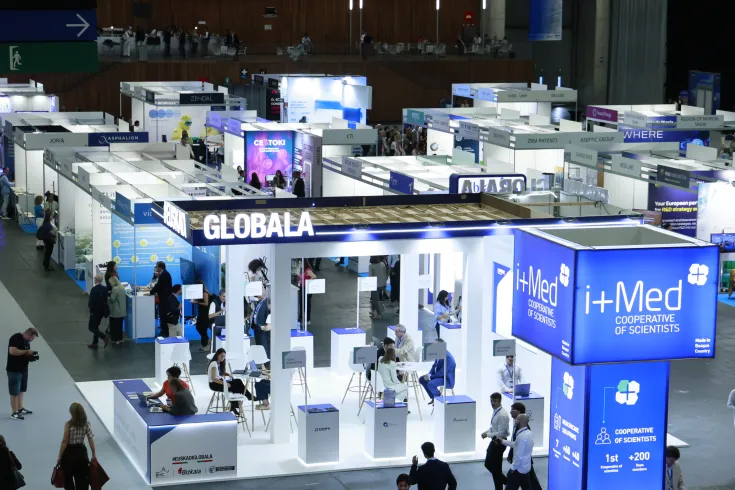
The creation of new companies based on scientific knowledge, access to financing to support their growth, and the transfer of technology to the market are among the challenges being addressed by BIOSPAIN 2026 during its second day.
BIOSPAIN 2026, Spain’s largest biotechnology event and one of the leading gatherings for the sector in Europe, is taking place from 29 September to 1 October at the Bilbao Exhibition Centre (BEC) under the theme “Bioinnovation that clicks”. The event brings together key players from across the biotechnology sector to examine the challenges that will shape the future of innovation in health, sustainability, industry and competitiveness.
Organised by the Spanish Bioindustry Association (AseBio), in collaboration with the Provincial Council of Bizkaia, the Basque Government and the Basque Health Cluster (BHC), BIOSPAIN 2026 is addressing, during its second day, the challenges companies face from their earliest stages through to consolidation and international expansion.
In this context, experts have also highlighted the need for an ecosystem capable of supporting projects throughout their entire journey, from company creation and growth to access to financing and the transfer of technology to the market.
Creating companies from scientific knowledge
Spain has a strong scientific base capable of generating projects with the potential to become internationally competitive companies. However, turning high-quality research into a company requires identifying those projects that have the necessary conditions to grow and developing a viable business model around them.
In this regard, Clara Campás, PhD, Managing Partner at Asabys Partners, explains that Asabys looks at four elements when identifying projects with potential: “truly differentiated science, strong intellectual property, a clear unmet medical need, and excellent researchers behind the project”.
Creating a spin-off also requires supporting researchers through a process that goes far beyond scientific research itself. “We deliberately do not require a management team; when a spin-off is being created, that team does not yet exist, and that is precisely our job,” Campàs explains. The aim is to support researchers “from project identification through to building a world-class management team”.
Among the main challenges companies face in their early stages, Campás highlights access to financing at the point of creation, particularly pre-seed funding, as well as attracting the talent needed to transform a scientific project into a scalable company. This is compounded by the need to turn the technology into a business model and a development plan capable of attracting international investors.
Financing tailored to each stage of growth
Access to financing is another key factor in enabling a company to progress from the early stages of research through to commercialisation and international expansion. Experts stress the importance of combining different sources of financing according to the maturity of each project and avoiding funding gaps that could hinder its development.
From Asabys’ perspective, Campás notes that today’s market is more selective than it was in 2021, with fewer deals and greater demands from investors, who are looking for differentiated science and evidence supporting a company’s potential.
In the early stages, when private markets are not yet able to assume certain levels of risk, combining public and private financing becomes particularly important. This is the context for Asabys Innvierte Tech Transfer, a new fund resulting from CDTI’s Innvierte Deep Start call together with the European Investment Fund (EIF). The fund works with academic projects at TRL 2–4, with the aim of contributing to the creation of between 10 and 12 leading spin-offs.
BME, meanwhile, stresses the importance of understanding financing as a continuous process in which each stage requires different instruments. Public funding plays a particularly important role during the early stages of research and innovation, while private capital and, subsequently, capital markets can help finance company growth and internationalisation. Along this journey, BME offers different alternatives tailored to varying levels of maturity, including BME Scaleup and BME Growth for equity markets, and MARF for debt financing needs.
This pathway also includes the Pre-Market Environment (Entorno Pre Mercado, EPM), which helps companies prepare for future funding rounds and eventual access to the markets through training, support and connections with investors, advisers and other ecosystem stakeholders. More than 30% of the companies participating in this environment operate in the life sciences and healthcare sectors.
In this regard, Francesco Sottile, from PNO Innovation, points out that public and private financing “should not be seen as alternatives, but rather as complementary tools within a coherent financial strategy throughout the innovation cycle”. In life sciences, where development cycles are long, capital-intensive and high-risk, he considers it essential to combine public funding — particularly during the research, validation and demonstration stages — with the early involvement of clinicians, industry and investors.
Strengthening technology transfer to reach the market
Beyond creating companies and facilitating access to financing, another challenge is ensuring that technologies developed at universities and research centres reach the level of maturity required to enter the market.
For Sottile, the first step is to “turn scientific or technological potential into a clear roadmap from the laboratory to the patient and on to the market”. This involves validating the need addressed by the technology, generating the necessary evidence, defining how it can be scaled, bringing in the appropriate capabilities and partners, and anticipating the financing needs at each stage.
Among the main barriers to technology transfer are the gap between research results and the level of technological maturity required for validation and demonstration, the difficulty of finding partners with complementary capabilities, and the need to define an exploitation strategy from an early stage.
“It is essential to incorporate a market, intellectual property, regulatory, scale-up and financing perspective from the early stages,” Sottile notes. He also highlights the need to better connect science, clinical practice, industry and investment, and to build the right ecosystem for each stage of development.
In this process, public-private collaboration models can help connect the different stakeholders. According to Sottile, these models work particularly well when science, clinical practice, companies and the public sector are involved from the early stages, with clearly defined objectives and responsibilities.
Public-private consortia make it possible to combine scientific excellence, clinical validation, industrial capacity, market knowledge and financing. The key is not to bring together a large number of partners, but to build collaborations in which each stakeholder contributes complementary capabilities, technologies or market access, with a clear focus from the outset on results, exploitation and market uptake.
Thinking globally from the outset
The growth of biotechnology companies also depends on adopting an international perspective from their earliest stages. For Campás, this means designing clinical and regulatory strategies from the outset with markets such as the United States, Europe and Asia in mind, building management teams with international experience, and creating a shareholder base capable of facilitating both access to new markets and subsequent financing rounds.
In this regard, Asabys highlights examples such as SpliceBio, Ona Therapeutics and Ibrain Neuroelectronics, companies founded in Spain that have developed international operations and attracted the interest of international investors.
The challenge, therefore, is to build an ecosystem capable of supporting projects throughout their entire journey: from knowledge generation and company creation to validation, financing, technology transfer and market access.