Venture capital plays key role in fight against cancer
On 28 April, AseBio Investor Day will bring together more than 50 investors from all over the world with disruptive biotech companies so they can meet and consolidate connections. We spoke with some of them on the main area of research among our members: oncology
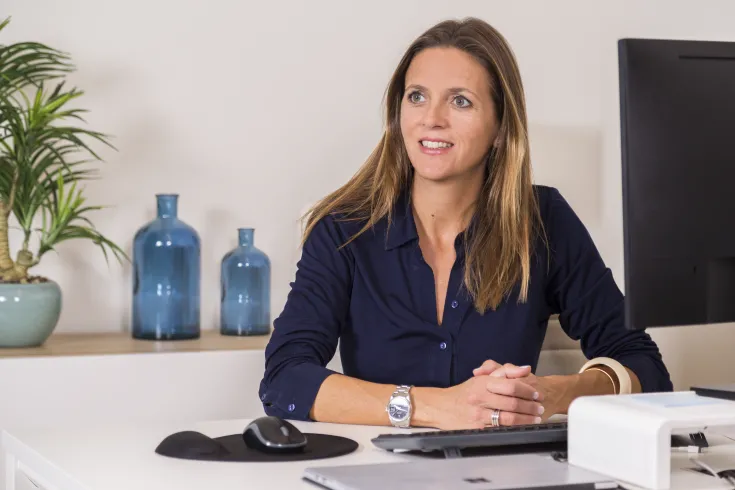
In the photo: Clara Campàs, co-founder and CEO of Asabys Partners
The Barcelona-based venture capital fund set up by Clara Campàs, Asabys Partners, receives pitches from four or five companies looking for investment each week. Of these, 25% have ideas or are working on research to cure cancer, a disease with 19 million cases diagnosed in the world each year. According to the latest report from the Spanish Society of Medical Oncology (SEOM), this figure is expected to reach 30.2 million by 2040, with the knock-on effect of increased mortality. But as these curves rise, the number of solutions available to patients also increases. The second, more hopeful graph is due in part to all these biotechnology solutions reaching Campàs that Asabys Partners chooses to take a risk on.
Thanks to funds like hers and funding sources that didn’t exist 10 years ago, such as crowdfunding and new project schemes that hadn’t been created, the path to find answers to cancer is promising. “The perspective has changed,” the expert says.
For her, there are two essential components in the cocktail of solutions: platforms that encompass various types of cancer to treat multiple patients with the same tool, and monoproducts that focus specifically on one to treat it as precisely as possible. “Now the vision is global and that is key to our battery of tools. We’re putting together the puzzle to end cancer as soon as possible, or at least make its impact on patient quality of life as small as possible,” explains Campàs. She seems convinced that, with all these projects that are born, live and survive, “we’re going to cure cancer or make it a chronic condition.”
Of all those dossiers they receive, which ones stand out and why? “Right now, for us to invest in a company working on cancer, it has to have disruptive potential. It has to potentially be a game changer, a new approach to cancer that is totally different and highly ambitious in its results for patients,” says Campàs. Another crucial aspect she mentions is talent, both on the science team behind the original idea and continuing it and the company’s ability to attract it.
The founder of this Spanish venture capital firm explains that, as they get so many pitches, the competition for funding in oncology is “fierce”. However, most importantly for her, that shows the projects that get it are the best and can go far.
A tool with a global vision
One of the companies that, despite the cut-throat competition, secured over €4.5 million in funding in December 2021 plus another €1.5 million this year with Columbus Venture Partners, is Integra Therapeutics, a Spanish biotechnology company that isn’t even a year and a half old and will be at the AseBio Investor Day for the first time this year on 28 April. They focus on technological and clinical development of a platform for precisely inserting therapeutic genes into patients’ cells to treat genetic diseases and cancer. In short, they are working with that global vision Campàs mentioned. “We’re excited for AseBio Investor Day because, for us, it’s very helpful to concentrate all that partnering, introduce ourselves and consolidate relationships quickly, effectively and face to face,” notes Avencia Sánchez-Mejías, co-founder and CEO of Integra Tx.
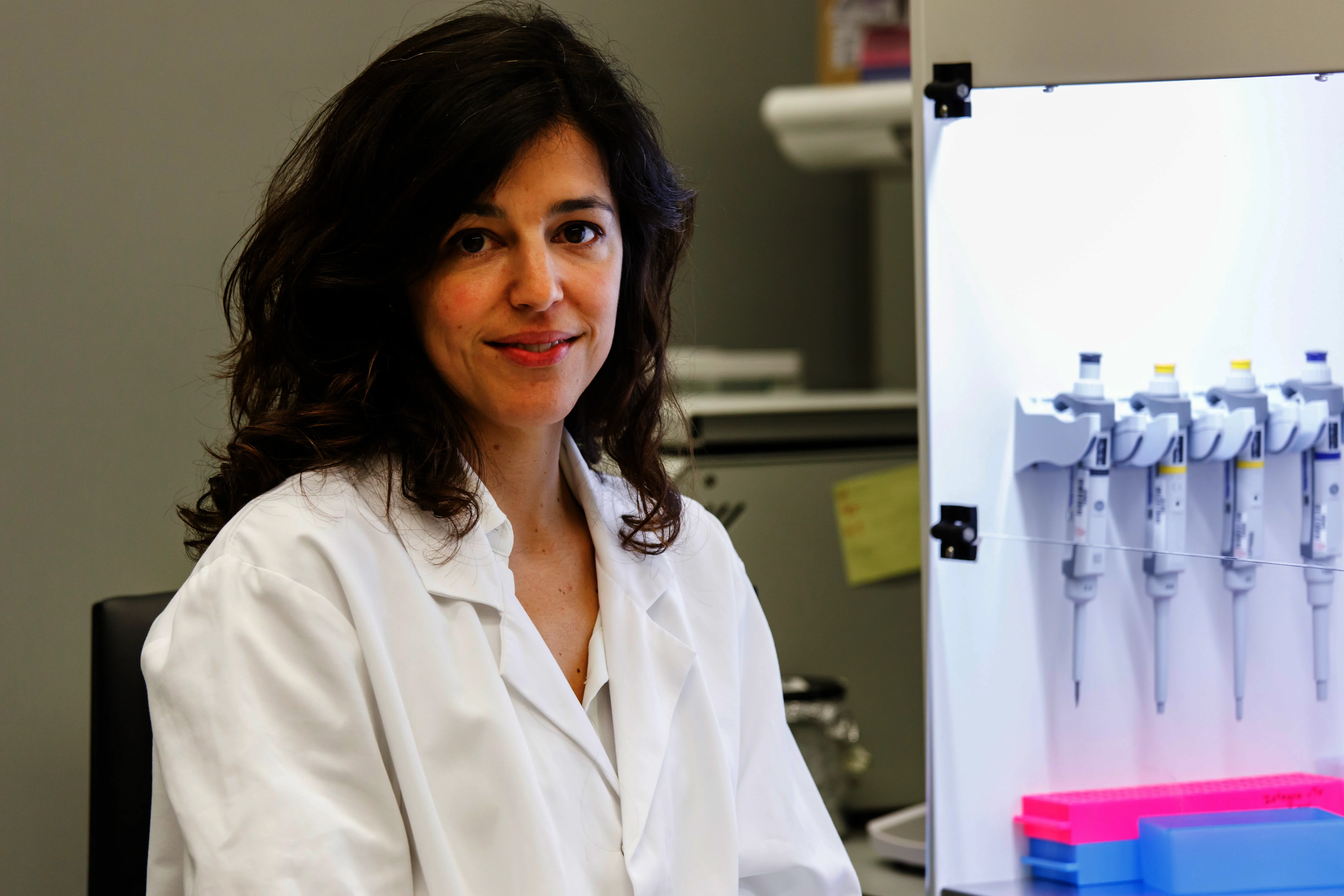
In the photo: Avencia Sánchez-Mejías, co-founder and CEO of Integra Tx.
They’ve done a lot in this year and a half, and had some surprises, above all in terms of funding. “This is a paradigm shift compared to other years,” says Sánchez-Mejías. “They understood our platform better in the United States and now it’s happing in Europe too. The benefit of investing in technology platforms like ours is becoming clear. Genetic diseases are a unique market niche that currently has no solution and that’s a great motivator. The fact that it affects so many people makes it worth it,” she adds.
The company’s next challenge is to move into the clinical phase, and for that they need to finish the preclinical studies and secure a new round of funding. “We’re really excited because the results we can achieve will have a huge impact on society,” she says. The CEO believes they have a very good opportunity to position Barcelona and Spain as a cluster for genetic diseases. “We’ve had a lot of support from local investors. We’re showing that we can do this work both in Spain and in Europe,” she asserts.
In line with this aspect, it is important to highlight that Barcelona has been a privileged environment for them, given the number of investors that specialise in biotechnology. “Biocat has helped us a lot in finding funding from international and European investors. Events like AseBio Investor Day, BIOSPAIN and BIO-Europe are also key for us. Thanks to all of them, we can put together the final pieces of funding we need,” she says.
Promising Spain: a young sector with solid science
AdBio Partners is one of the French investors that has made it possible for Integra Tx to take that leap. Thanks to organisations like it, an idea hatched in a lab can end up on the market, and more importantly, helping patients; a project born among test tubes and microscopes at a university can become a company that scales up its product and broadens its portfolio of solutions to improve the lives of millions of people. This French fund will also be in Madrid on 28 April to discover Spanish companies and consolidate previous relationships.
But...Why Spain? Alejo Chorny, operating partner of AdBio Partners, explains that Spain has a strong tradition in science but, to some extent, has taken longer to foster the biotechnology sector. But that’s not a negative, quite the opposite: “As a result, the sector here is much younger and this gap between a mature scientific/academic sector that produces innovative, cutting-edge science with great potential for transfer and an emerging biotechnology sector generates a market that is particularly interesting for firms like AdBio.”
At AdBio, oncology is also predominant and what matters most to them is that the project is based on a real medical need in this highly demanding and in-demand field. “The first thing I look at is the problem the project is attempting to resolve,” he notes. “Then the technology they’re using to do so, which has to be grounded in solid science, and then I see how they’re positioned compared to others.” Although the treatment of cancer patients has changed drastically in recent years, as Chorny explains, there is still a huge need for new therapies, as they only work in subgroups of patients with some specific types of cancer. Plus, “there’s currently a lot of innovative, disruptive research in this field,” he concludes.
Indeed, oncology still leads our members’ research and you can see what they’re working on in more detail in our pipeline.
Plus, AseBio has a Venture Capital Workgroup, started just over a year ago and led by Campàs with eight venture capital funds specialising in the life sciences, that aims to position venture capital as a key way to fund the creation, development and growth of innovative biotech companies.