


The debt biotechnology still owes Gregorio Marañón (and is now beginning to repay)
In 1920, the Spanish physician and humanist Gregorio Marañón popularised and adopted the phrase coined by Hippocrates: “There are no diseases, only patients.” It sounds simple, yet it has taken more than a century for it to be fully realised.
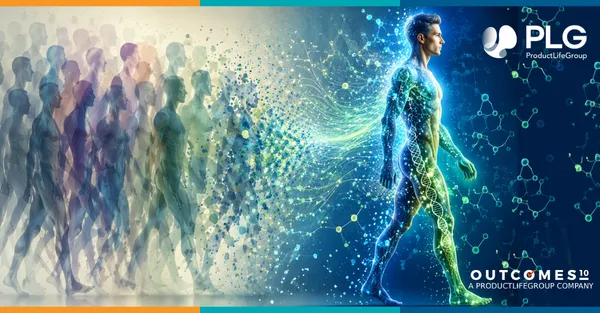
The phrase does not describe a clinical protocol. It expresses a broader ambition, a form of medicine that recognises in each patient a unique reality, one that cannot be reduced to averages or broad categories. At its core, it was a promise, one that twentieth-century medicine embraced with conviction, but was unable to fulfil for decades.
And it could not fulfil it, largely due to a lack of tools. Clinical medicine in the last century was, by necessity, a medicine of averages. Treatments were designed for the “typical patient”; standard doses were defined; protocols were built to work for the majority of cases. This model was (and still is) efficient and necessary, but inevitably overlooks individual differences. We treated diseases rather than patients. We knew it—and, to some extent, we accepted it, because there was no alternative.
Biotechnology has radically changed this equation. Not by creating a new medical ideal, but by providing real tools to support a very old one. Genomic sequencing, the development of molecular biomarkers, targeted therapies, systems biology: all these advances share a common denominator. They finally allow us to understand each patient as an individual.
There is, however, a perception worth challenging: the idea that the more technology medicine incorporates, the colder and more distant it becomes. That algorithms replace the physician’s judgement, that data displace empathy, that molecular biology pushes the patient away from the centre of care. This concern is understandable, but it stems from a deeper misconception. Technology does not define the spirit with which it is used. In precision medicine, biotechnology is not distancing the patient from the healthcare system—it is bringing the healthcare system closer to the patient.
In this sense, the relationship between biotechnology and precision medicine is not merely technical. It is deeply ethical. Every advance in the molecular characterisation of patients is, in reality, an act of recognition: recognition that each person is not interchangeable with any other; that their disease has its own biological context; that they deserve a response tailored to their needs. Far from dehumanising medicine, technology here becomes the vehicle for a humanistic ideal that has waited more than a century for the right tools to make it possible.
In this context, the biotechnology sector occupies a central role that goes beyond commercial innovation. Biotechnology companies are, to a large extent, the architects of the bridge between medical aspiration and clinical reality. Every new molecular diagnostic platform, every gene therapy, every omics-based analytical tool represents both a scientific advance and a response to a long-standing promise. These are not merely products—they are, in the most literal sense, instruments in the service of a vision of medicine that places the individual at its centre.
Marañón—and even less so Hippocrates—could not have imagined genomic sequencing, CAR-T therapies, omics data, or predictive models of therapeutic response. Yet he intuited something that biotechnology is now demonstrating with evidence: that the most advanced medicine is, paradoxically, the most human. A medicine capable of recognising the unique clinical story behind every patient. One hundred years after that promise was made, we finally have the tools to fulfil it.
Is our healthcare system ready to treat patients, and not just diseases?