


The IIBB-CSIC and Chemotargets promote the development of new therapies against cancer through the computational design of pharmaceuticals
The agreement combines the preclinical models developed by the Institute of Biomedical Research of Barcelona (IIBB-CSIC) with the computational design platform of the company Chemotargets, based at the University of Barcelona Science Park (PCB-UB), to improve the identification of new therapeutic candidates against cancer.
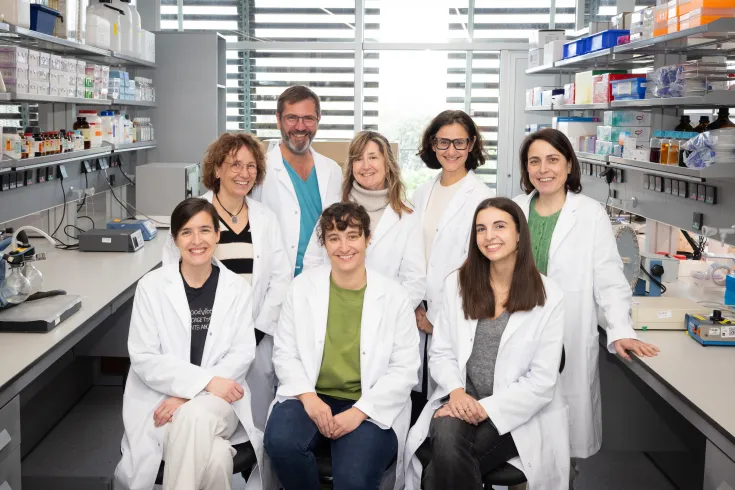
The Spanish National Research Council's Institute of Biomedical Research of Barcelona (IIBB-CSIC) and the company Chemotargets, based at the University of Barcelona Science Park (PCB-UB) and specialising in computational solutions for the design and identification of therapeutic candidates, have signed a collaboration agreement to promote new lines of research aimed at fostering the discovery of innovative cancer therapies.
The collaboration combines the IIBB-CSIC's experience in preclinical oncology models with Chemotargets' platform for the design and generation of pharmaceuticals in order to facilitate the discovery of new bioactive small molecules. These low molecular weight compounds have the ability to interact with biological processes involved in diseases such as cancer, which makes them important candidates in the development of new treatments.
Co-directing the project are Dr Pilar Navarro, director of the Cancer Molecular Targets research group at the IIBB-CSIC, and Prof. Jordi Mestres, head of research at Chemotargets. This public-private alliance responds to a shared interest in accelerating the translation of biomedical research into new therapies for patients with unmet medical needs.
Dr Navarro's team at the IIBB-CSIC focuses its research on the mechanisms that drive the development and progression of cancer, with special emphasis on pancreatic cancer, one of the most aggressive tumours with the worst prognosis. Using a multidisciplinary approach that integrates basic and clinical research, the group works to identify new opportunities for diagnosis and treatment, with a special focus on the interaction between tumour cells and their environment. This work has allowed progress to be made in strategies to improve early detection and the development of more effective therapies, in the hope of increasing survival rates and quality of life for patients.
"This agreement represents a unique opportunity to connect biomedical research with the development of new-generation drugs. At the academic level, we are identifying new cancer vulnerabilities, but translating these molecular targets into concrete drugs remains a major challenge. The collaboration with Chemotargets allows us to take this step, integrating their advanced platforms into our biological research to accelerate the identification and optimisation of new therapies, bringing scientific innovation to patients," said Dr Navarro.
"The research carried out by Dr Navarro's group represents the latest frontier in the identification of new therapeutic targets against cancer. We have a unique opportunity to generate new bioactive molecules for proteins considered difficult to treat at the molecular level in the past and to speed up the arrival of more specific and safer treatments for patients with unmet medical needs," said Prof. Mestres, founder of Chemotargets.
Chemotargets has evolved from developing software for the prediction of side effects, widely used in the pharmaceutical industry, to creating new solutions based on artificial intelligence applied to pharmaceutical design. In this context, the company, which celebrates its 20th year, has developed a platform for the generative design of drugs that makes it possible to create molecules from chemical fragments and optimise them in terms of their interaction with target proteins and their safety profile. This approach makes it possible to tackle complex therapeutic targets and to progress in the development of more precise therapies by integrating artificial intelligence into drug discovery.
The collaboration highlights the convergence between biomedical research and advanced technologies to develop new cancer therapies, with the aim of expanding the treatment options available to patients with highly complex clinical diseases.