


Public research at the Barcelona Science Park – UB reaches a record investment of €84 million in 2024
The public research ecosystem of the Barcelona Science Park (PCB-UB) continues to expand, achieving 84.6 million euros in funding in 2024, 20.8% more than the previous year and the highest figure ever recorded.
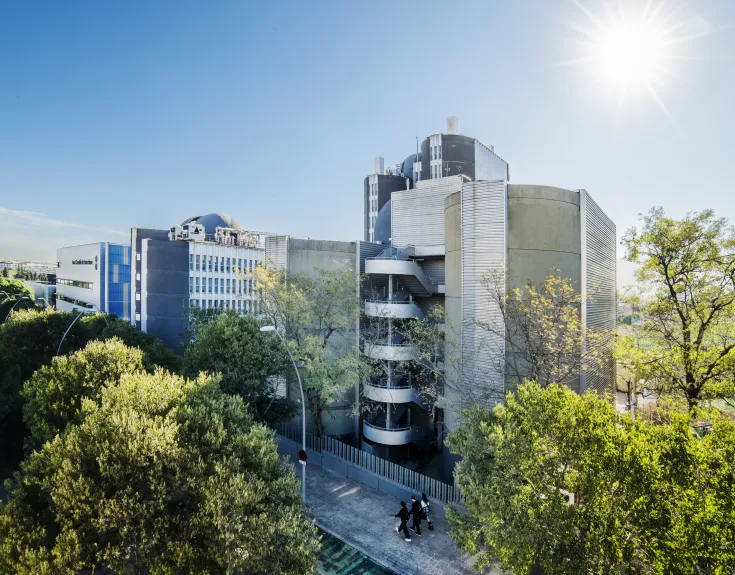
The public research institutes, together with the units and groups of the University of Barcelona (UB) present at the Barcelona Science Park (PCB-UB), have reached a new funding record in 2024. This milestone solidifies the PCB’s position as one of the major European hubs of research and innovation in life sciences and as a benchmark in attracting international talent.
During 2024, investment in the public research ecosystem continued to grow, reaching 84.6 million euros, coming from public funds (67.9 million euros) and private capital (16.6 million euros). These figures confirm that 2024 was a year of remarkable economic growth at the PCB, with an increase of 20.8% compared to 2023 (69.9 million euros). In total, taking into account the investment raised by private companies (124.7 million euros), the financing of the entire PCB ecosystem last year reached 209,3 million euros.
“These data show the great potential of public research in the life sciences, which continues to grow in parallel with private companies. For the PCB-UB, it is key to have such powerful institutions in our community, because of the value they contribute and because they promote increasingly solid public-private collaboration; a model that we at the PCB and the University of Barcelona consider to be our seal of quality and success,” said PCB director Maria Terrades.
For his part, the Rector of the University of Barcelona, Joan Guàrdia, emphasized that data like these demonstrate that the PCB-UB has the foundations to become “the leading hub for biotechnological and biomedical innovation and research in Southern Europe.
The large research institutes and centres housed at the PCB led the way in securing financial resources in 2024. In terms of public funds, the Institute for Research in Biomedicine (IRB Barcelona), which raised 31.3 million euros focused on cancer, stands out in particular. The Institute for Bioengineering of Catalonia (IBEC), internationally recognised for its interdisciplinary research in bioengineering and nanomedicine, raised 18.8 million euros. The National Centre for Genomic Analysis (CNAG) raised 8.5 million euros, consolidating its position as a benchmark in genomics and bioinformatics, while Institute of Molecular Biology of Barcelona (IBMB-CSIC) reached 5.7 million euros of public funding.
Following the trend of previous years, the funding received by public research centres from private capital remained below public investment, although it increased significantly to 16.4 million euros, 30.8% of all funding raised. IRB Barcelona led fundraising with 7 million euros, followed by the CNAG, which raised 5.6 million euros, the IBEC, with 2.7 million euros, and the IBMB-CSIC, which reached 188,436 euros.
The centres, units and groups of the University of Barcelona located at the PCB have contributed to this economic boost. This is the case of Creatio – the UB Production and Validation Centre of Advanced Therapies – which raised 1.8 million euros (1 million euros of private capital) for the development of cell and gene therapy and tissue engineering. The Technology Unit of the UB Institute of Cosmos Sciences (ICCUB-Tech) obtained 135,714 euros (98% of funding). The Laboratory of Metabolic Dynamics in Cancer raised 285,000 euros (60,000 euros of private capital), and the BioNMR Group, part of the UB Department of Inorganic and Organic Chemistry, received 55,000 euros entirely from public funding.
Also noteworthy are the Scientific and Technological Centres of the University of Barcelona (CCiTUB), which attracted a total of 2.5 million euros for the acquisition of scientific and technical equipment through Spanish Ministry of Science, Innovation and Universities calls. These platforms, which support research activity, have one of the three unique scientific and technical infrastructures (ICTS) in Catalonia at the PCB: the nuclear magnetic resonance (NMR) laboratory. At the beginning of 2025, new latest-generation microscopy equipment was inaugurated, which is a key step forward in consolidating the UB as a benchmark in electron microscopy. The equipment cost 3.35 million euros, co-financed by the European Regional Development Fund of the European Union within the framework of the ERDF Operational Programme for Catalonia.
A place where science connects with society
Knowledge transfer continues to be a central element of the PCB’s innovative ecosystem, where research centres, start-ups, spin-offs and large corporations carry out their RDI activities and transform research into innovative products and services with a tangible impact on society. The research carried out combines scientific rigour and a vocation for innovation, reflected in the constant efforts to protect the results, enhance the value of knowledge and promote technology transfer.
In the field of public research, the centres and groups registered a total of 18 priority patent applications and extensions during 2024: 14 from the IBEC, 3 from IRB Barcelona and 2 from the BioNMR Group at the UB. These data reflect the vitality and dynamism of a public sector that, together withthe PCB’s companies and start-ups, transforms science into tangible solutions for society.
In addition, during 2024 it participated in 675 national and European collaborative RDI projects, an activity that not only fosters international cooperation but also funds much of its research and development, ensuring that scientific results reach the market and society faster.
Driver of scientific production of excellence in Catalonia
The PCB is home to some of the most innovative and productive centres in Catalonia, with 552 scientific publications in 2024, combining innovation, international impact and discoveries that can transform the health and science of our planet.
In biomedicine, IRB Barcelona made headlines with the discovery of CPEB4 protein condensates implicated in autism, published in Nature. The IBEC succeeded in reducing bladder tumours by 90% with self-propelled nanorobots, a breakthrough so significant that it made the cover of Nature Nanotechnology. Meanwhile, the CNAG completed the most detailed cellular atlas of the human amygdala to date, with more than 556,000 cells analysed, providing key clues about the immune system and diseases such as leukaemia.
In astronomy, the UB Institute of Cosmos Sciences (ICCUB-Tech), as part of the Gaia mission of the European Space Agency (ESA), participated in the identificationof themost massive stellar black hole in the Milky Way, which was highlighted in an article in Astronomy & Astrophysics.
In 2024, 14 new research infrastructures were added. Among the most outstanding examples, the CNAG has expanded its latest-generation sequencing platform with 4 new pieces of equipment, while CCiTUB has incorporated 7 pieces of scientific-technical equipment that enhance its experimental capabilities. It should also be noted that Creatio UB has added 2 new infrastructures and ICCUB-Tech has acquired advanced welding equipment.