


#BIOSPAIN2023Interview | "There is a significant gap between the generation of knowledge and its transformation into a new asset that can benefit patients"
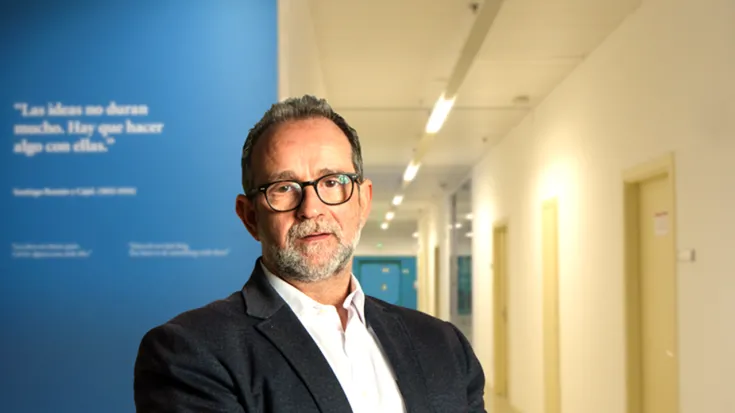
José Miguel Vela, CSO of Welab, Bronze Sponsor of BIOSPAIN 2023, discusses the current gap in the innovation of new drugs and the crucial role of collaboration.
Currently, about 70% of drugs under development are biotechnological, a figure that demonstrates biotechnology's significant role in the advancements being made in healthcare. The most recent example can be found in the health crisis experienced with Covid-19. Throughout the pandemic, the biotechnological sector has shown its ability to provide responses to unexpected events in the form of vaccines, treatments, and diagnostic solutions.
Biotecnology has enabled significant progress that has translated into improved health and well-being for individuals and societies. This is why reducing the waiting times from when a drug receives approval from the relevant regulatory authorities to its availability for patients is crucial. It is also essential to shorten the time from the conception of ideas to the initiation of trials or many of the bureaucratic processes established on the path to authorization.
This shared horizon is embraced by Welab, a leading platform in Spain for drug discovery and preclinical development. Their vision regarding the development of new medicines is clear: innovation has many ingredients, but one unique formula - collaboration. As a Bronze Sponsor of BIOSPAIN 2023, they will analyze the optimal mechanisms to bridge the existing gap in innovation within the comprehensive program of the event taking place between September 26th and 28th in Barcelona. We speak with José Miguel Vela, CSO in Welab.
AseBio. What is Welab? What kind of services do you offer?
José Miguel Vela. Welab is an integrated platform for drug discovery and development, which is part of the Leitat technological center, a private non-profit entity.
The services we offer encompass everything necessary for the discovery of new chemical entities in the field of small molecules, enabling progress from the idea stage to clinical phases. In our case, this includes capabilities in drug design and modeling, initial analysis of novelty and patentability, medicinal and analytical chemistry, in vitro and in vivo pharmacology, ADME (absorption, distribution, metabolism, and excretion) studies, safety and toxicology assessments. We also provide consultancy on the chemical or biological feasibility of a project and the critical path or drafting of the necessary documentation for regulatory phases. As an accredited center, we adhere to Good Laboratory Practice (GLP) standards, allowing us to conduct preclinical studies and analyze clinical samples.
AseBio. Your R&D center is one of the largest Integrated Drug Discovery Centers in Spain. What distinctive features would you highlight about your center compared to other initiatives in our country?
José Miguel Vela. At Welab, we have a team of over 70 researchers, and our facilities at the Barcelona Science Park encompass well-equipped laboratories spanning approximately 2,500 m2.
I believe there are two distinctive aspects. Firstly, as I mentioned earlier, we have the entire value chain from start to finish within a single center, with the capability to generate a candidate with guarantees. We address all critical parameters from chemical, pharmacological, metabolic, efficacy, and safety/toxicology perspectives.
The second and most significant differentiating aspect is Welab's human team, which comes primarily from the pharmaceutical industry with many years of experience in developing molecules that have reached the market. Welab operates with pharmaceutical industry standards and has first-hand knowledge of its needs.
AseBio. What are the advantages of accelerating the path to clinical development for drug discovery projects from academic, biotechnological, or pharmaceutical initiatives?
José Miguel Vela. There are many diseases for which doctors lack suitable treatments. We have experienced this during the covid-19 pandemic. In such cases, current treatments are often ineffective, not universally applicable, or come with associated side effects that limit their use.
All of this is open to improvement, and any option that facilitates access to new therapies should be embraced and enhanced. Clearly, Welab can contribute to this objective.
AseBio. As experts in the fundamental steps and R&D standards of the pharmaceutical sector, what do you consider to be the strengths and weaknesses?
José Miguel Vela. There is a significant gap between the generation of knowledge, which includes the discovery of new genes and proteins critical to a disease, and the transformation of that knowledge into a new asset (innovative medication) that can benefit patients suffering from the disease. Taking Spain as an example, we have excellent science, primarily in public research centers and universities, capable of generating new knowledge and, therefore, new ideas (therapeutic hypotheses) to approach the treatment of a disease in a different and potentially better way.
We also have an excellent healthcare system and are leaders in Europe in conducting clinical trials, which allows us to assess the efficacy and tolerability of new treatments in well-characterized patient cohorts. But, in between, there is a huge gap... between the idea (new therapeutic hypothesis) generated in the laboratory and the medication administered to patients in clinical trials at hospitals, there is a long and challenging journey.
This journey involves the necessary discovery of a new drug with the novel mechanism of action identified in the laboratory and the appropriate characteristics for its efficacy and safety to be tested in patients. This deficient transfer is our country's weak point. And it is in the transfer of value where Welab is strong, establishing the bridge between the idea and the medication. The discovery of drugs is the core mission of Welab.
AseBio. What should be improved?
José Miguel Vela. The translation from discoveries made in the laboratory to patients in need of new therapeutic solutions.
The ultimate return of research is the benefit it brings to society through new therapeutic solutions, as well as economic gains and the creation of quality employment. This return only occurs when scientific findings materialize in the discovery of a new drug that can be tested in patients. Public investment in research centers in our country allows us to boast an excellent scientific output. Similarly, we have an extraordinary and enviable national healthcare system.
In conclusion, we are well-positioned in terms of scientific production indicators, and we are European leaders in clinical research. However, our innovation indicators are quite low. In terms of innovation, we lag behind many countries with lower investment in R&D, substantially lesser scientific output, and much less developed healthcare systems. In the biopharmaceutical sector, our innovation indicators are worse than in other industrial areas. Much has been done, but much more needs to be accomplished if we want to increase our competitiveness, at the very least in line with our investment and capabilities. It is not merely a matter of increasing investment in R&D and innovation.
The innovation ecosystem in Spain must be improved by facilitating collaboration among the different stakeholders (which do exist). We need to create an environment where sound science, generating new ideas, finds a well-paved path to transform those ideas into developable assets with possibilities of reaching the market and, consequently, the patient.
Ultimately, we need to drive this transfer and connect science, pharmaceutical discovery and development, industry, and business. This is not just an opinion based on my over 20 years of experience in pharmaceutical R&D; it is an objective reality. Both the diagnosis (poor return to society on investment in R&D) and its solution (the need to implement mechanisms that facilitate effective flow between science, biopharmaceutical innovation, and society) are well-known, as highlighted, for example, in the OECD report titled "Improving knowledge transfer and collaboration between science and business in Spain," published in December 2021.
AseBio. What does Welab expect from BIOSPAIN 2023?
José Miguel Vela. We have two objectives. The first is to connect with key stakeholders in the biopharmaceutical innovation ecosystem, both in Spain and beyond our borders, in order to maximize the alignment of our value proposition with the real needs of the industry. The second is to gain visibility. Welab offers a platform dedicated to drug discovery and preclinical development with unique capabilities, expertise, and an industrial vision in this country.
We believe that we have much to contribute to fill the innovation gap mentioned earlier, whether by collaborating with initiatives from the public or private sector, entrepreneurs, start-ups, spin-offs, or established industries. However, we are relatively new as a pharmaceutical R&D service platform (before 2020, we were the R&D center of a pharmaceutical company), and we want the sector to be aware of our presence and consider us as a partner in transforming their ideas into new medications. Our status as a non-profit organization and our affiliation with the Leitat technological center, dedicated to transfer and innovation in our country, demonstrate our commitment to this goal.