


Biotechnology also looks after your skin
Having just returned from the summer break, and consequently from exposing our bodies to the sun, we talked to two biotechnology companies who are searching for solutions to protect our skin using cosmetics
Skin diseases affect nearly 900 million people worldwide, according to the World Health Organisation. Throughout our lifetime, our skin is exposed to a great many risks: anything from radiation from ultraviolet rays to simply ingesting a certain product or food has a direct effect on it.
It is the biggest organ we have, working as a barrier and protecting us from contact with the environment, but what looks after it?
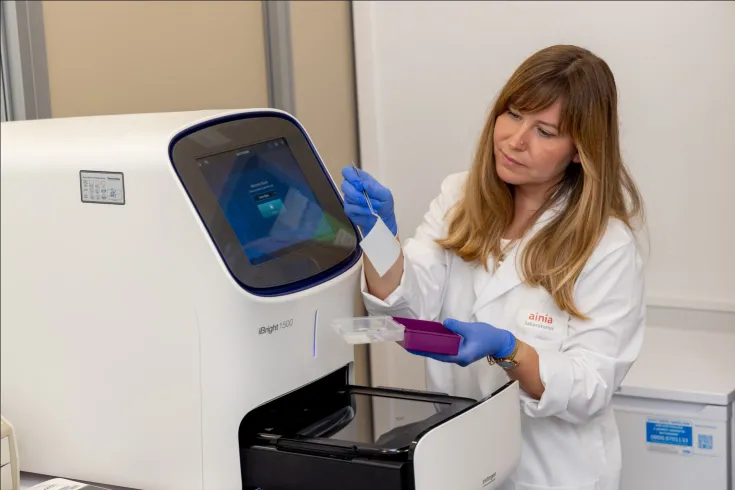
The answer is biotechnology. This ground-breaking and transformative industry plays a key role offering increasingly effective and lasting solutions and formulas. “It helps look after the skin in a number of different ways. We can find out how skin works at a molecular level, but also, we can design specific and effective products (such as cosmetics) to look after it” says Lidia Tomás-Cobos, doctor of biochemistry and molecular biology, who has been working at AINIA for nearly 20 years.
In a society increasingly exposed to crises previously unseen in modern history, especially the climate crisis, “people have realised that a tool like biotechnology is essential” she adds. The cosmetics industry is “one of the most changing markets and one that needs to be constantly adapting to consumer needs” says Daniel Pando, CEO of Nanovex Biotechnologies, a company that has been around for nearly 10 years. That's why this industry has found a new way of improving its products by means of biotechnology. “It has the ability to correct, prevent and better manage the product's functions, as well as offering consumers scientific rigour”, doctor Tomás-Cobos underlines.
But, how does a ‘biotech’ cream take shape, how does it get onto our bathroom shelf?
The first thing is to obtain the active ingredients, the ones you want to have acting in your product. “Biotechnology enables us to obtain bioactive compounds or substances addressed to a specific action more easily”, explains Paloma Juárez, doctor in biotechnology from the Universitat Politècnica de València and technician in AINIA's Industrial Biotechnology department. Bioactive compounds make a cream more effective, something the market is increasingly demanding. It opens up new avenues and hits the target.
While the traditional compounds are used with an up-bottom approach, where “you have a series of compounds and you have to ask yourself the question, what’s this for?”, explains Juárez, biotechnology serves to detect needs and find solutions to them. In short, it gives you the opportunity to decide exactly what it is you want and to find it by means of a ‘bottom-up’ approach. So, the process is less tedious and is directly aimed at what you want to achieve.
However, developing the product is not so easy. Although the cosmetics sector has a great advantage over the pharmacological industry in terms of time (it takes 10 to 12 years to bring out a drug and most fall by the wayside in one of the research phases, while no more than two years are needed to bring a cosmetic to the market), cosmetics still have to pass a certain number of phases before they can reach our bathroom shelf.
Once the active ingredients have been collected, which is what we do at AINIA (among other things), we need to know where we want them to act and help them get to that place. Nanoencapsulation, a technique carried out by Nanovex Biotechnologies, comes into play in this vehiculation process. Nanovex Biotechnologies is already operating on an international scale (United States, China and all of Europe) and 95% of the companies targeted in Spain are interested in its services. Nanoencapsulation works like “a taxi taking the plumber to the place the fault has occurred”, Pando explains, speaking metaphorically. This way, the active ingredient gets to the place it will act more quickly, and, what's more, “it’s efficacy can be 20 times that of a traditional product”.
The encapsulated active ingredients are ready for cosmetics manufacturing and development companies to use them in their market launches, but now the question we must ask ourselves is, does society consume ‘biotech’ cosmetics?
What has to happen for people to buy a ‘biotech’ cosmetic?
As we have said above, biotechnology has a lot to offer the current, traditional cosmetics industry.
In the context we are dealing with, where society is increasingly aware of the climate issue, cosmetics made with ‘biotech’ are a great alternative. The cosmetics industry was the first to promote biotechnological research to develop alternative in vitro systems, many of them based on cell techniques and tissue engineering. Furthermore, the use of animal ingredients is decreasing and more and more companies are producing only 100% vegan products. Likewise, obtaining bioactives or ingredients through biotechnological tools allows bioprocesses to be designed in order not to depend on certain raw materials or to reduce their cost, as well as to consider the environmental impact from the outset, seeking the best solution so that this impact is always kept to a minimum. “Science enables us to find more efficient and sustainable alternatives”, affirms Tomás-Cobos.
But for society to be aware of all the advantages biotechnology can bring, it needs to be informed about them, “a barrier, used correctly, can turn into an opportunity” Pando concludes.
AseBio companies are also on this journey to care for your skin, with over 20 products currently under research, according to information from our pipeline. One of them is Proteos Biotech, which works in the production and marketing of recombinant enzymes for their application in cosmetics and whose ‘pbserum’ brand is expanding all over the world.