“In this business, you never stop being a scientist”
Participants and sponsors of AseBio Investor Day 2022, just two days away, give us some tips for setting up a biotech company from academia

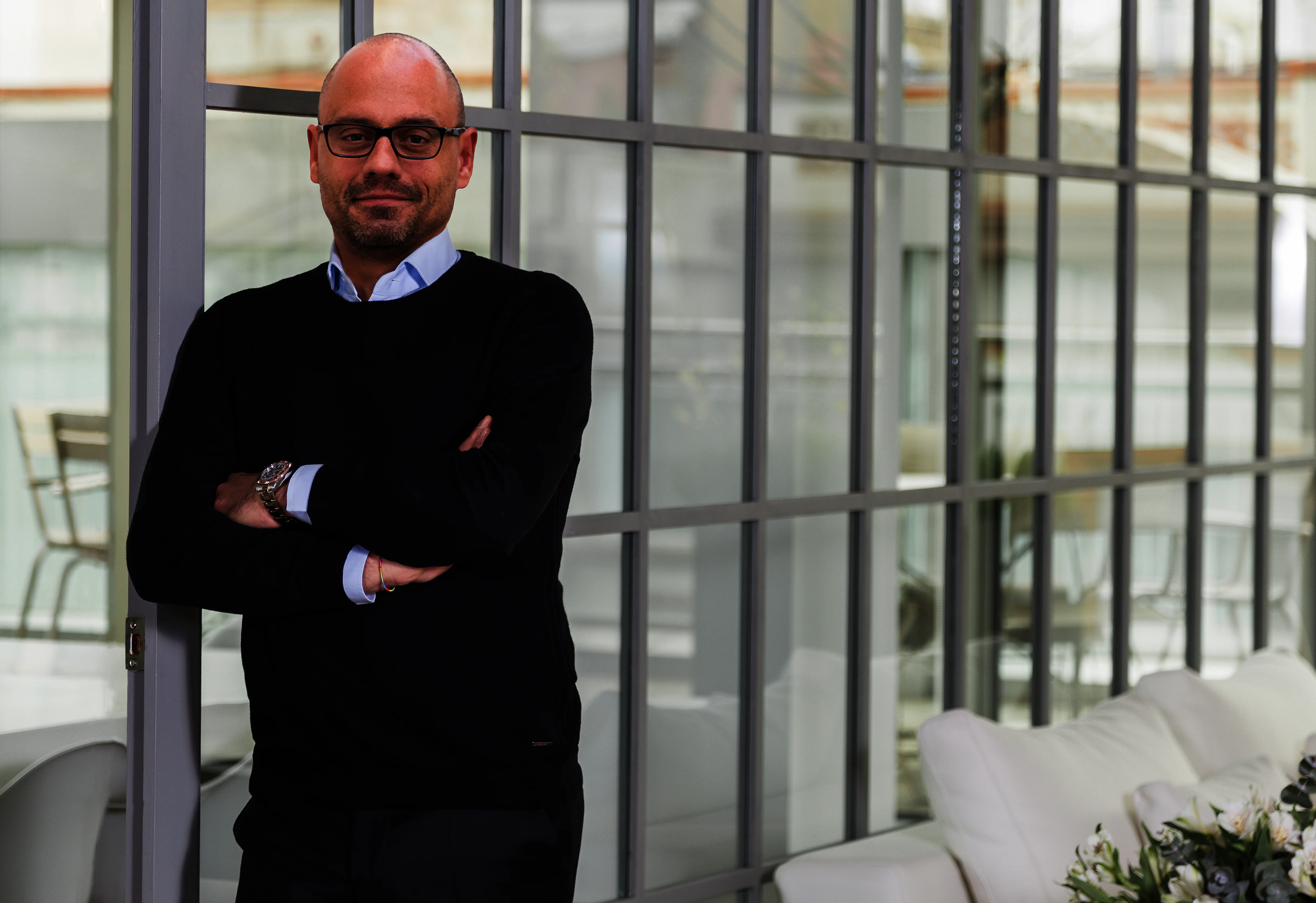
In the photo: Carlos Buesa, CEO of Oryzon
Spain is the second world power in clinical trials and there is no doubt that the country’s science is among the most solid around. However, turning that research into industry is a daily challenge in the Spanish biotechnology sector. AseBio Investor Day, in just a couple of days in Madrid, will bring together the main European players in an attempt to turn that challenge into a recurring reality: for science to reach the market through solutions to improve people’s lives and protect the planet.
More than 50 investors from all over Europe will be in Madrid to discover innovative projects from Spanish biotechnology: some yet to be born, some already sprouting and the most advanced, on the threshold of the market. “This type of event is very important because the Spanish ecosystem needs to flower and endure. Investment opportunities come through these channels,” explains Joël Jean-Mairet, managing partner of Ysios Capital, bronze sponsor of AseBio Investor Day 2022.
Science and dialogue: the first essentials for setting up your biotech firm
To support projects created out of academia, for Ysios it is clear that the key is starting from a dialogue based on science and development to help the nascent company build its middle- and long-term plan. “I think it’s something very important that all investors should do because it adds value and sews seeds for the future,” adds the expert who also started up his own company straight after getting his PhD in Zurich (Switzerland) and sold it four years later for Fr235 million.
The venture capital fund, which got its start in 2008, has already raised over €400 million and taken 14 products to market. Jean-Mairet’s main tip is that “someone who wants to start a company should worry about the biotechnology that goes with it, make sure it has something that sets it apart.” He explains that Ysios sees all sorts of opportunities, especially ones they consider very “green”, known as pre-seed rounds. “We try to get to the details and set up experiments with the entrepreneurs that we think are essential. We contribute lots of know-how and help the project take shape.”
Communication and industrial fabric: two main shortcomings
Carlos Buesa, CEO of Oryzon, took the leap with his university research group and founded the company 22 years ago, when “the community was still weak and small and we all knew a lot less.” Today the company is publicly traded. But they learned a lot along the way. The expert, who notes that in this business, you never stop being a scientist, highlights the importance of communication. With the public in general and with the financial world, specifically. He believes this skill “is everything” in this industry because to take a company all the way, as a scientist or researcher, “you can’t be oblivious to the investment ecosystem or no one will invest in you.”
In short, it’s essential to understand the vocabulary, expressions and how the people who can fuel your project, turning it into products, perceive messages so you can adapt yours. “It’s important to have that vision, the financial, regulatory and competitive schemes in this industry, and understand that it is a very open and global sector,” he notes.
Another point we all have to work on is funding to consolidate the industrial fabric. What’s the problem? The biotechnology sector has an insurmountable barrier: “We set up companies that don’t start invoicing on day one, that have a long time-to-market cycle. This, everywhere in the world, is paid for with surplus savings and investment mechanisms, funds that get tax breaks for investing in this type of project.” In Spain, we still have some way to go.
In the photo: Joel Jean-Mairet, founding partner of Ysios Capital
For his part, Jean-Mairet believes it isn’t a failing of our country but merely reflects that the ecosystem isn’t as mature yet, and this is something we can work on. The progress has been very positive over the past 10 years, the Ysios Founding Partner notes. “If we look at the ecosystem today and what it was ten years ago, there’s no comparison. Today we can announce big rounds of investment; we’ve sold companies; we’ve put made in Spain products on the market...” But that doesn’t mean we can stop encouraging entrepreneurship, facilitating landing and attracting international talent.
Innovation, development and investment: a virtuous triangle
Firms like PwC, platinum sponsor of AseBio Investor Day 2022, see an unprecedented opportunity to promote an innovative sector that has a bright future and much to offer. Leticia Rodriguez Vadillo, PwC Spain partner for Retail, Consumption and Health, explains that she has been observing the particularities of the biotechnology world for some time. For them, to be a good advisor, you have to understand what makes this type of company unique in order to take an approach that adapts closely to what it needs. “The potential of the biotechnology industry, from the point of view of innovation, growth and strategic importance, is huge. That’s why it is a sector we want to bet on with a long-term vision,” she says.
To approach science and try to turn it into industry, the company starts off with a climate of trust: “It is important to understand the company and their point in the life cycle in order to work with targeted, agile actions,” the expert begins. It is important for them that both parties understand it is “a journey” that leads to commercialisation and growth of the company. “We also want to be a bridge between biotechnology, investors and the pharmaceutical industry. To be the glue and accelerant for that virtuous triangle. A travel companion...” she continues.
To finish off, Rodriguez Vadillo notes that many times an industry isn’t just about its size, but also its strategic importance. For PwC, with a strong presence in the healthcare sector, it is a natural extension to position itself as a company that wants to understand the sector much better. “We want to accompany companies on that voyage and help many more be successful in taking their science to market. That’s why we have to focus, invest and work closely with the companies. AseBio Investor Day is crucial for that,” he finishes.
The three people interviewed will be doing a panel discussion called “From academia to industry: lessons learned from creating a successful biotechnology company” this Thursday in Madrid (Spain). Check out the full programme here.