


Why we need to stop stigmatising mental illnesses: "They should also be researched and treated"
On the occasion of World Mental Health Day this Monday, we talk to Carlos Buesa, CEO of Oryzon, a company dedicated to finding solutions for schizophrenia and borderline personality disorder.
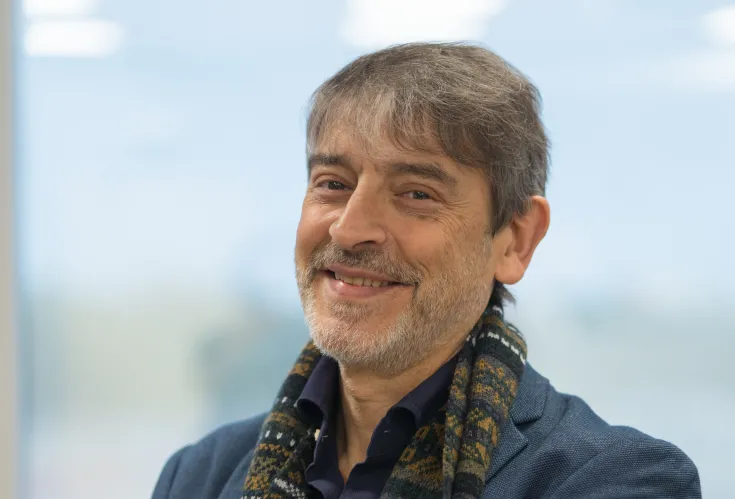
Since the Covid-19 pandemic that confined the population within four walls, mental health has been in the social spotlight and has had a good deal of media attention. Little by little, mental illnesses have ceased to be just scars and wounds that no one sees and that everyone hides, and have become the focus of agendas and the news.
One of our members, Oryzon Genomics, has long been aware of the unmet needs of nervous system illnesses and, among all those that exist, has focused on borderline personality disorder and schizophrenia, which more than 24 million people suffer from worldwide. It is also worth remembering that one in eight people have a mental disorder, according to the World Health Organisation.
"Science has taken us there," begins Carlos Buesa, the company’s CEO. The Oryzon team works on the epigenetic mechanism that controls gene function. LSD1 is the target that controls the expression of key genes in the workings of the nervous system during a human being's development. What the researchers found is that, using a variety of models, inhibition of this enzyme produces significant neurological changes: reduced aggression, increased sociability, improved memory...
Schizophrenia, formerly known as dementia praecox, has two main symptomatic components, according to Buesa. The positive symptoms (schizoid attacks) are already treated with antipsychotics that control the appearance of outbreaks. However, there is still some way to go in "highly debilitating" aspects that often lead to a high degree of dependency: the negative symptoms. “These are the most dangerous patients because they lose interest and go unnoticed. The outbreaks produce cognitive deterioration and accelerate this dependence," the expert explains. “This constructs a component that highly limits the person’s psychosocial development," he adds.
How can we treat something as abstract and complex as neurons?
Oryzon is working on this. They are conducting a clinical trial, in phase IIb, called Evolution, launched in partnership with hospitals throughout Spain, led by the Vall d'Hebron Hospital and the Ministry of Science and Innovation, to treat patients with schizophrenia for six months, without bias, and see how they react to their oral molecule vafidemstat, a drug that has already demonstrated its safety in more than 300 patients and preliminary signs of improvement in several psychiatric conditions.
In his view, Spain has a great tradition and great prestige in the biology of the nervous system. "We have made top-tier scientific contributions in this field," he says. But treating a mental illness is a great challenge that continues to outwit science. They are very complicated illnesses, because, as Buesa says, unlike a tumour, which you can extract and analyse in detail, here a different, much more abstract line of attack is required. At the moment, it is impossible to find out what is happening in real time in these deficient neurons. "We have some remote approximations thanks to electrophysiology and imaging, but they are not sufficient... they slow down the mechanism medicine in general is adopting: personalised precision medicine," he acknowledges.
Just as there are dozens of kinds of lung cancer, there are many different kinds of schizophrenia and borderline personality disorder. Here at Oryzon, we are working in this direction too, because, although we try to homogenise the symptoms, each case is different and complex. Every patient is different. “We learn indirectly. We analyse neurodevelopmental syndromes in a child, caused by mutations in specific genes, as in the case of Kabuki syndrome, and it gives us an idea of what other dysfunctions and degenerations involve," he explains.
But beyond medicine as such, we also need to change our perception of these pathologies in order to better treat the millions of patients suffering every day. "Mental illnesses exist, just like pancreatic or stomach illnesses. There should be no stigma attached to them," Buesa insists. “Just like a patient with a stomach ache goes to the doctor, so should a patient with a mental disorder. We need to de-dramatise mental illnesses and stop being ashamed of them". Yet, since the pandemic, which clearly focused society's attention on these disorders, there has also been a tendency to normalise the illness to the extreme of associating it with a mindset. Returning to his comparison, the Oryzon director repeats that "just as it is not ‘normal’ to have an upset stomach all your life, neither is it ‘normal’ to have a mental problem", and that is why we must seek help and solutions and treat them like any other illness.
In the face of the stigma attached to mental illness and its extreme normalisation, companies like Oryzon are finding obtaining funding for their projects, both from the public sector and from investors, a real challenge. However, we end the interview on a positive note: “Illnesses of the nervous system are experiencing a new renaissance. There is a new interest in this type of problem and in the biopharmaceutical sector as a whole there is a specific focus on them".