


#BIOSPAIN2026 | Biotechnology drives new solutions to advance towards a more sustainable economy and address major health and production challenges
HIPRA, SID and the Xunta de Galicia highlight at BIOSPAIN 2026 the role of prevention, collaboration and innovation ecosystems in transforming scientific knowledge into solutions with real impact.
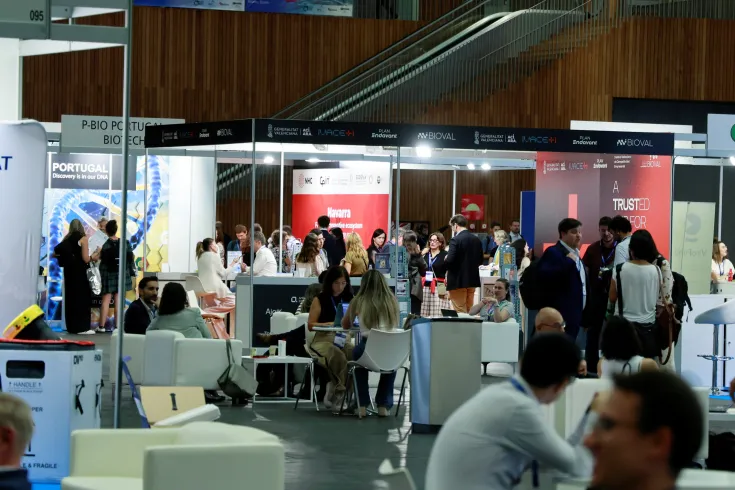
Biotechnology is expanding its ability to provide integrated responses to some of today’s major challenges, from human and animal health to climate change, food security and the efficient use of resources. In this context, BIOSPAIN 2026 is focusing its third day on the role of biotechnology innovation in advancing towards more preventive, sustainable and competitive models, as well as on the need to strengthen ecosystems capable of taking scientific knowledge from research to market.
The event, considered Spain’s largest biotechnology event and one of the leading European gatherings in the sector, has taken place on 29 and 30 September and today, 1 October, at the Bilbao Exhibition Centre (BEC) under the theme “Bioinnovation that clicks”. It is organised by the Spanish Bioindustry Association (AseBio) in collaboration with the Provincial Council of Bizkaia, the Basque Government and the Basque Health Cluster.
This final day highlights that the potential of biotechnology depends not only on generating scientific knowledge, but also on the ability to connect research, companies, talent, financing, infrastructure and public authorities. Building these ecosystems is particularly important to ensure that innovations can be developed, scaled up and brought to market.
Prevention as a tool to address health challenges
From HIPRA’s perspective, biotechnology innovation makes it possible to address health challenges through prevention and an integrated approach. Carlota Gómez de la Hoz, Corporate Affairs & Sustainability Executive director at HIPRA, explains that the One Health approach highlights the close relationship between human health, animal health and the health of the planet.
“Biotechnology enables us to address these challenges through prevention and with a much more integrated approach,” explains Gómez de la Hoz, who highlights the role of vaccines, diagnostic tools and digital solutions in anticipating diseases and better controlling their spread.
In this regard, innovation can also help address challenges such as antimicrobial resistance. Vaccination can prevent infectious diseases and thereby reduce the need for antibiotics. For HIPRA, this preventive approach should be complemented by diagnostic, monitoring and data analysis tools that enable earlier disease detection and more efficient use of resources.
This connection between health and sustainability also extends to production systems. “Healthier animals require fewer treatments and make it possible to optimise the resources needed to produce food, while also reducing the environmental impact associated with disease,” says Gómez de la Hoz.
Ecosystems equipped to enable innovation to grow
For biotechnology solutions to reach the market, companies need an environment capable of supporting them throughout the different stages of their development. In this area, Pilar Gil, co-CEO of SID – Science & Innovation Districts, highlights that a strong innovation ecosystem requires connections between science, business, talent, investment and public authorities.
“A strong innovation ecosystem needs all its components to be connected,” says Gil, stressing that innovation does not happen in isolation. In sectors such as biotechnology, this connection must also include scientific and technological infrastructure adapted to organisations’ needs, such as laboratories, clean rooms, specialised equipment and flexible spaces.
Access to this infrastructure becomes particularly important when companies enter the scale-up phase. According to Gil, a company seeking to grow needs to allocate resources to developing its technology, attracting talent, consolidating its regulatory strategy and expanding its commercial activity, while physical growth may simultaneously require new facilities and equipment.
In this context, plug & play models can make it easier for companies to access the infrastructure they need to grow, reducing both initial investment and start-up times. “A company can access the infrastructure it needs to take the next step without having to undertake its entire development on its own,” Gil explains.
In addition to infrastructure, ecosystems must be able to support companies throughout their different stages of growth. Shared access to core facilities, services and advanced scientific equipment, together with connections to other organisations, can facilitate the development of new projects and foster synergies.
“Being part of a community makes it possible to connect with other companies, create synergies, gain visibility and access new opportunities,” says Gil, who also highlights the importance of these environments in attracting and retaining talent.
Galicia, an ecosystem with the potential to drive the bioeconomy
The connection between knowledge, resources and business activity is also one of the factors shaping the development of the bioeconomy. Carmen Cotelo, director of GAIN – Galician Innovation Agency, highlights the potential of Spain, and Galicia in particular, to develop biotechnology solutions in areas such as the marine environment, health, food, forestry and the circular economy.
“Spain has enormous potential to become a leader in the bioeconomy thanks to the diversity of its natural resources, its scientific capabilities and the development of specialised ecosystems,” says Cotelo.
In Galicia, technologies such as precision fermentation, engineered living materials and marine biotechnology can help transform traditional sectors and open up new areas of high-value-added activity. Applications include the development of alternative proteins and advanced ingredients, new compounds for nutraceuticals, cosmetics and natural fertilisation, biodegradable bioplastics made from resources such as algae, and biofuels that do not compete with food crops.
Biotechnology can also help maximise the value of Galicia’s natural and productive resources through better resource utilisation, the valorisation of by-products and the development of new, more efficient and circular products and processes.
To accelerate this process, Cotelo considers it essential to strengthen the connection between research, business and the market. “The challenge is to increasingly improve the connection between research, business and the market in order to accelerate technology transfer and turn that knowledge into economic activity, employment and greater competitiveness for Galicia,” she says.
From research to solutions with real impact
Knowledge transfer is another key element in consolidating the bioeconomy. In healthcare, collaboration between companies, hospitals and research centres makes it possible to identify real needs, validate solutions and facilitate their scale-up.
In this regard, Galicia has healthcare, scientific, technological and business capabilities that are driving areas such as digital health, data, supercomputing and artificial intelligence. Among the initiatives highlighted by the director of GAIN is 1HealthAI, a data space focused on human, animal and environmental health and promoted by the Galician Supercomputing Centre (CESGA).
This shared vision is also reflected in the new Galicia Biotechnology Strategy 2026–2030, which, according to Cotelo, places particular emphasis on technology transfer, acceleration and industrial scale-up.
Collaboration must extend to all stakeholders across the ecosystem. “To ensure that knowledge reaches the market, public authorities, companies and research centres must work together from the early stages on real challenges,” says Cotelo.
In this context, the different stakeholders participating in BIOSPAIN 2026 agree on the need to move towards models in which biotechnology innovation is underpinned by collaboration and ecosystems capable of connecting knowledge, infrastructure, talent and financing. This connection makes it possible to transform research into new solutions while contributing to the economic and sustainable development of regions.