


Juan Bueren will share at BIOSPAIN 2026 the key insights on how to turn research into life-changing gene therapies
Juan Bueren will be one of the keynote speakers at BIOSPAIN 2026, held in Bilbao from September 29 to October 1, the leading biotechnology event in Southern Europe.
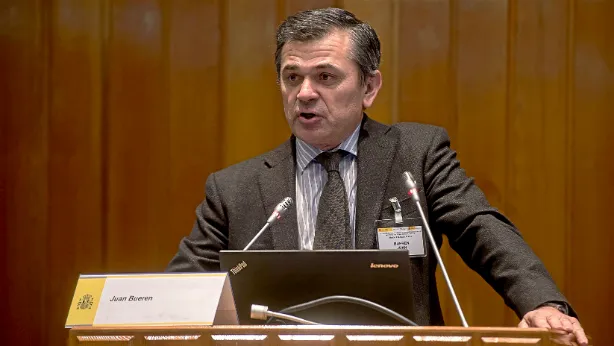
Talking about gene and cell therapy in Spain and Europe means talking about Juan Bueren. A leading researcher in advanced therapies and rare diseases, Professor Bueren has built a key career driving biomedical innovation by combining research, institutional leadership, and knowledge transfer.
He currently directs the Biomedical Innovation Unit at CIEMAT and the CIBER for Rare Diseases, and coordinates the Joint Advanced Therapies Unit of CIEMAT and the Health Research Institute of Fundación Jiménez Díaz. His experience also includes serving as President of the Spanish Society for Gene and Cell Therapy and of the European Society for Gene and Cell Therapy, establishing him as one of the most influential voices in the biotech ecosystem.
Juan Bueren will be one of the keynote speakers at BIOSPAIN 2026, held in Bilbao from September 29 to October 1, the leading biotechnology event in Southern Europe. On the occasion of his participation, we spoke with him about the evolution of advanced therapies, the challenges of the biotech ecosystem, and the opportunities shaping the future of health innovation.
After decades dedicated to research in advanced therapies, Juan Bueren has witnessed —and played a leading role in— some of the milestones that have transformed gene therapy from a scientific promise into a clinical reality.
Among them stands out the recent FDA approval of the first gene therapy medicinal product designed in Spain, specifically for patients with a congenital immunodeficiency (leukocyte adhesion deficiency type I), as well as the clinical trials conducted first in Spain and later in the US and the UK for the treatment of patients with Fanconi anemia, a rare disease characterized by progressive bone marrow failure and which, until then, had hematopoietic stem cell transplantation from a healthy donor as its main therapeutic option.
After more than two decades of laboratory work developing preclinical models and new gene therapy vectors, a consortium of Spanish researchers and clinicians launched a pioneering trial based on a lentiviral vector developed in the country. The project enabled the genetic correction of patients’ stem cells and their reintroduction without the need for chemotherapy treatments. The results marked a turning point for this disease.
“‘It was very exciting to see how, little by little, the corrected cells began to outcompete the uncorrected ones,’ Bueren recalls. A decade later, some of the treated patients show fully corrected stem cell populations, with functional recovery of bone marrow. A result that helped reshape the international perception of gene therapy’s potential in this condition.
The experience accumulated over these years has also given him first-hand insight into the challenges of translating biomedical innovation from the lab to the patient. For Bueren, one of the main hurdles remains the complexity of the entire development and transfer process, as well as the high costs associated with clinical trials and the manufacturing of the vectors required for these therapies.”
However, he believes Spain has several distinctive strengths. Among them, he highlights the existence of a collaborative advanced therapies network, support for independent clinical research, and the close connection between researchers, clinicians, and rare disease specialists—factors that have enabled pioneering projects in this field.
Looking ahead, Bueren is convinced that the efficacy of gene therapy for certain rare diseases is no longer in question. Its key added value, he explains, lies in its curative potential: treatments designed to correct the root cause of disease in a long-lasting, and even permanent, way. However, he warns that the major challenge in the coming years will be ensuring that these therapies are economically sustainable.
“‘A single treatment should cure the patient for life. That is its main advantage. The biggest drawback is that, as these therapies are currently designed, their extremely high cost makes them difficult to sustain for public healthcare systems,’ he notes. For this reason, he considers it a priority to develop new strategies that maintain efficacy and safety levels while significantly reducing production and development costs.
This journey—from basic research to the arrival of new therapies on the market—will be a key focus of his keynote address at BIOSPAIN 2026. Bueren will share the experience gained over years of translational research, a process that has enabled progress from early proof-of-concept studies to pioneering clinical trials and the transfer of technologies to the pharmaceutical industry.”
His career recently reached a new milestone: the marketing authorisation of the first gene therapy product initiated and developed in Spain, resulting from an international collaboration with Rocket Pharma. A clear example of how cooperation between public research, hospitals, funders, and industry can turn scientific knowledge into real solutions for patients. An experience that will undoubtedly bring a unique perspective to attendees at BIOSPAIN 2026.