


Biofish 3000 yake: the only method on the market for the objective determination of the degree of yake in tuna
BIOLAN launches a new analytical solution that allows to quantitatively classify the degree of YAKE in tuna, without the need to defrost and generate damage in the piece, and digitally monitor its quality
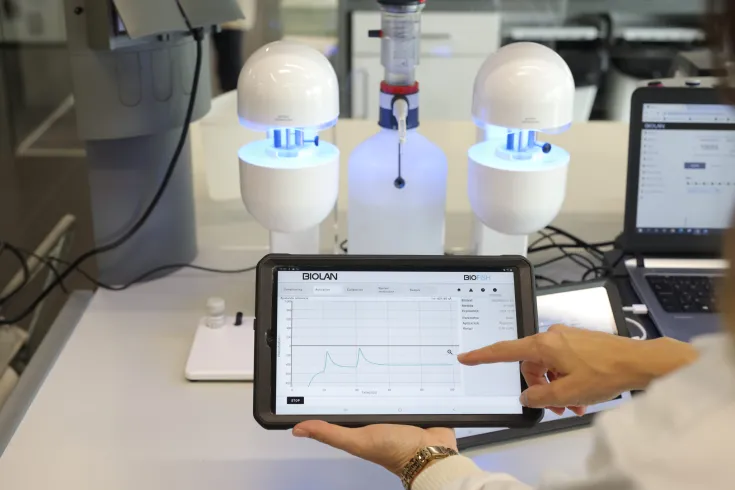
BIOLAN launches a new analytical solution that allows to quantitatively classify the degree of YAKE in tuna, without the need to defrost and generate damage in the piece, and digitally monitor its quality.
The Basque company BIOLAN goes a step further and becomes the first company capable of offering an objective solution to the problem of determining the Yake in tuna, positioning itself once again at the forefront of R&D and demonstrating its closeness to the needs of the industry.
The burnt flesh syndrome, or Yake in Japanese, manifests when tuna have been subjected to stressful situations at the time of slaughter or during fishing. The presence of Yake causes the fish to have metallic flavors and a brownish colour, accelerating the degradation process with a decrease in pH. The appearance of Yake carries a drop in commercial value, and is very punished in certain markets, especially in the Japanese market, where tuna meat is largely destined for sashimi preparations that demand the highest level of quality.
The industry's need for an alternative methodology to the current visual classification has led BIOLAN to launch the new BIOFISH 3000 YAKE, a revolutionary method for the objective determination of the degree of Yake. With this new application, BIOLAN aims to provide the tuna industry with an objective method with which to save time and avoid damage to the piece by taking a smaller amount of meat in the tail area, and thus be able to use the raw material for the final product that best corresponds.
The new BIOLAN method makes it possible to determine the degree of Yake in tuna thanks to chemical quantification, which positions it as the first alternative to the current visual assessment. BIOFISH 3000 YAKE shares with its biosensor brethren for histamine in tuna and sulphite in crustaceans, the characteristics of any BIOLAN method, namely that they are easy, fast and highly accurate tools.
In addition, BIOFISH 3000 YAKE belongs to the new generation of BIOLAN connected biosensors, smart devices that allow a comprehensive monitoring of the analytical process, from advanced visualization of results and cloud storage to product traceability throughout the value chain.
In conclusion, our BIOFISH 3000 YAKE is a new disruptive advance in food quality control, which facilitates the processing of tuna, resulting in increased competitiveness, efficiency and profitability for the tuna industry.