


#NewAseBioMember | "For us, AseBio represents much more than an industry association"
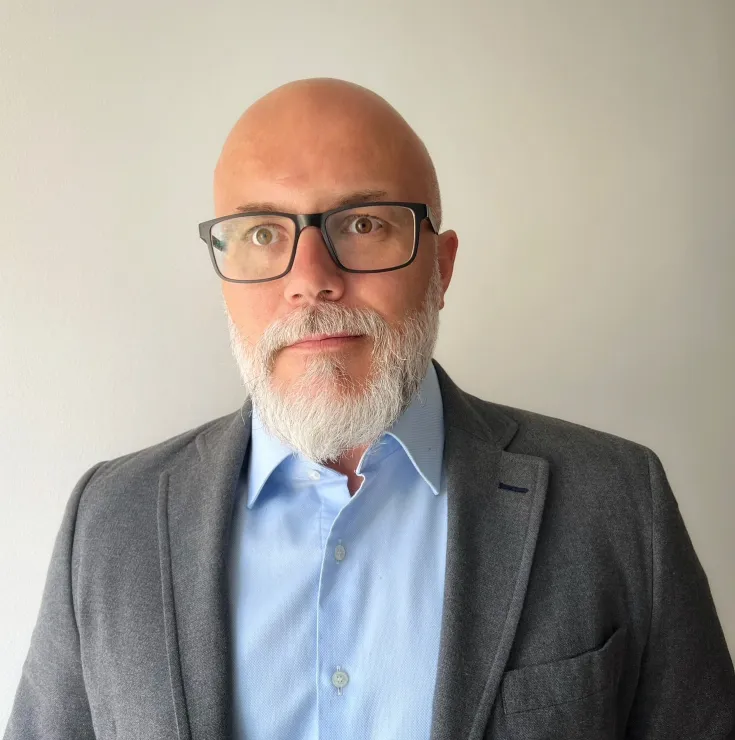
Meet our new AseBio member NegotiumBio. We spoke with Carlos Manuel Sousa Monagas, partner.
AseBio. What does your company's work bring to the table and what is its strength?
Carlos Manuel Sousa Monagas. At NegotiumBio, we help biotechnology and pharmaceutical companies make better strategic and commercial decisions across outsourced development, manufacturing, and supply chain operations.
Our core strength is the ability to bridge scientific and technical complexity with manufacturing economics, market intelligence, and commercial strategy. We go beyond conventional procurement and supplier selection by examining the underlying drivers of cost, capability, capacity, and execution risk to identify opportunities that are often overlooked.
Having supported more than 40 biotechnology and pharmaceutical companies, we bring an independent, cross-industry perspective to evaluating manufacturing partners, challenging cost structures, and negotiating complex agreements. Importantly, our approach recognizes that successful outsourcing decisions require balancing an interconnected matrix of technical, operational, financial, regulatory, and strategic considerations. We translate these competing and sometimes conflicting requirements into commercial agreements that appropriately allocate risk, align incentives, and support both immediate program objectives and longer-term business needs.
Increasingly, our vision is to complement this expertise with data-driven intelligence and predictive analytics, enabling companies to anticipate supplier risks and make more informed decisions rather than simply reacting to challenges as they arise.
Ultimately, our value lies in transforming complex scientific, operational, and commercial information into actionable strategies and contractual relationships that improve outcomes, reduce costs and risks, and support the successful development and commercialization of innovative therapies.
AseBio. What is AseBio for you?
Carlos Manuel Sousa Monagas. For us, AseBio represents much more than an industry association. It is a platform that brings together the scientific, technological, industrial, and entrepreneurial capabilities needed to strengthen Spain's biotechnology ecosystem.
We see AseBio as an important catalyst for collaboration, knowledge exchange, and international visibility, connecting innovative companies, research institutions, investors, and industrial partners.
We particularly value its role in promoting biotechnology as a strategic sector for Spain's economic development and technological competitiveness.
We believe that scientific excellence must be accompanied by strong industrial capabilities and sound business strategies. In this respect, AseBio provides an excellent environment for building the connections that can help translate innovation into tangible economic and societal value.
AseBio. When did you first hear about AseBio?
Carlos Manuel Sousa Monagas. Through our professional involvement in the European biotechnology and pharmaceutical industries, we have been familiar with AseBio and its activities for some time.
As our engagement with the Spanish biotechnology ecosystem has grown, we have increasingly recognized the association's important role in connecting companies, promoting innovation, and strengthening the international positioning of Spanish biotechnology.
Our decision to join reflects a natural evolution of our commitment to this ecosystem and our desire to contribute actively to its continued development.
AseBio. What do you expect from being part of an association like AseBio?
Carlos Manuel Sousa Monagas. We hope to establish meaningful relationships with innovative biotechnology companies, research organizations, and industrial stakeholders, while sharing our international experience in manufacturing outsourcing, strategic sourcing, and supply chain management.
We are particularly interested in fostering collaboration that helps Spanish biotechnology companies access competitive manufacturing capabilities, optimize their development and commercialization strategies, and expand internationally.
At the same time, we believe there is an important opportunity to explore collaborative approaches to procurement and manufacturing that could help companies achieve economies of scale, improve supply chain resilience, and strengthen the competitiveness of the Spanish biotechnology industry.
Our ambition is not simply to participate in the ecosystem, but to contribute practical expertise and help create opportunities for its members.
AseBio. What is the biggest challenge facing the biotech sector or your company?
Carlos Manuel Sousa Monagas. One of the greatest challenges facing the biotechnology sector, particularly in Spain and Europe, is bridging the gap between scientific excellence and industrial competitiveness.
Spain has a highly capable scientific and biotechnology community, but translating innovation into commercially viable products requires access to specialized manufacturing infrastructure, financing, industrial expertise, and robust international supply chains.
Many emerging biotechnology companies must rely on external manufacturing partners, often internationally, while navigating complex regulatory requirements, limited resources, and increasing pressure to control development costs and accelerate timelines.
We believe a key challenge is ensuring that the value generated through biotechnology research and innovation can also translate into industrial development, qualified employment, and sustainable economic growth.
Addressing this challenge will require stronger collaboration between companies, research institutions, manufacturing organizations, investors, and public stakeholders.
At NegotiumBio, we see an opportunity to contribute by helping companies make better outsourcing decisions, develop competitive manufacturing strategies, and identify opportunities for collaboration and shared resources.
The challenge is not only to innovate, but to ensure that innovation can be developed, manufactured, and scaled competitively.