


How a biotech firm from Granada found its place in the competitive international market
LentiStem Biotech, a spin-off that has just celebrated its sixth anniversary, decided to focus on CAR-T therapies, developing technology that instead of competing builds synergies
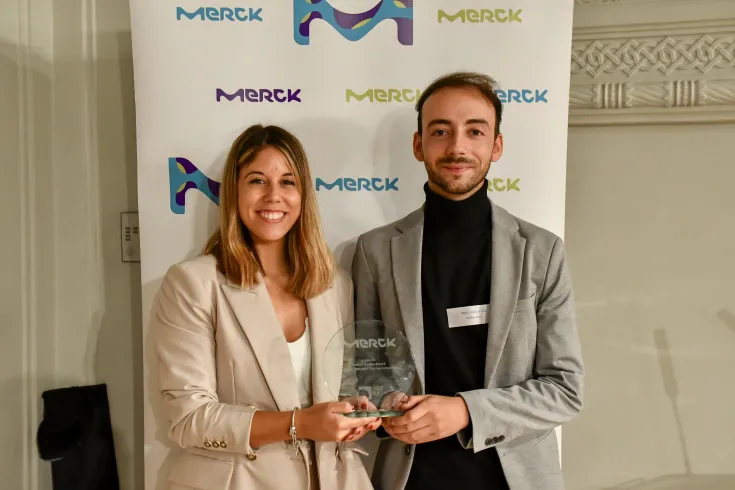
Twenty-five years of research in gene therapy, an innovative idea that has travelled around the world and a firm commitment to getting it to patients as quickly as possible. These were the keys behind the creation of LentiStem Biotech, a company from Granada that has just celebrated its sixth anniversary and winner of the Merck-AseBio award in October. “We knew we wanted to transfer our discovery to society and not let the research get stuck there. We knew that by creating a company we could take it further than with public funding,” begins Francisco Martín Molina, researcher, founder and president of the company’s Scientific Advisory Board.
The company was first established with the vision of developing gene therapies, but Francisco’s team saw an opportunity in the key area of oncology and a need in the field of CAR-T strategies, which the company has been working to improve for the past four years. The Andalusian Public Foundation Progress and Health, also an AseBio member, was key in establishing the company and promoting the early phases of the project through its technology transfer office. Furthermore, the support and guidance of the director of Knowledge Transfer, Internationalisation and Entrepreneurship at PTS Granada, Lourdes Nuñez, has been key in catapulting LentiStem onto the market, putting them in contact with essential stakeholders in Spanish biotechnology and helping them find investors willing to fund the idea born one day in a laboratory.
María Tristán, Chief Science Officer for the company that doesn’t have more than five employees, highlights that the greatest challenge of setting up a project like this, “as pure scientists”, is adapting the language, simplifying the messages, understanding that an idea that seems obvious may not be so clear to investors and working to make it more attractive. After several years without movement in terms of business, focusing on research and development, the time came to cross the Atlantic. In December 2021, part of the LentiStem team went to Boston through the Andalusian government’s EXTENDA programme. There, they not only discovered the biotechnology ecosystem in the US and the most specialised in CAR-T therapies and immunotherapy, but also realised that they can compete with the cutting-edge technology from that country, which leads the world in science. “It was highly enriching and we saw clearly that we are very competent,” adds María. “We can make a place for ourselves there. When we told them about our projects, they were all surprised at the quality of the science we were doing with the resources we had here in Spain,” she notes.
How does a company from Granada end up playing on the world stage in such a competitive arena?
Francisco has the answer. The technology was born in London and developed in Granada thanks to prior work by scientists from all over the world and the ingenuity of the team in Granada. One of the most crucial aspects was to figure out how to pool all the different knowledge and apply it to improve CAR-T therapies. “Plus, in CAR-T therapies there are many areas that can be improved and LentiStem focuses on one that hasn’t been developed much so far,” the founder says.
Another important aspect that has helped them find their place on the international scene is that they don’t compete with other companies; others will benefit from the LentiStem technology. “We generate synergies,” they say, “controlling and improving what has already been developed.”
Investors are also a strength. “Their ears prick up when they hear CAR-T,” notes Francisco. But, like any company, they also need funding to reach the clinical phase. CAR-T therapies are already revolutionising treatment of haematological cancers and are expected to start being used soon for solid tumours, opening the doors to a huge market and a massive impact on society. Plus, the technology LentiStem Biotech is developing, based on controlling expression of therapeutic genes, can go further and be applied to other gene therapies that can benefit from that activity.
A company that retains talent and gives them a voice
Pedro Justicia is passionate about CAR-T therapies, which were the focus of his Master’s final project overseen by Francisco himself. When he saw the chance to move into the private sector, he didn’t hesitate. “This is what we all strive for: to accelerate the process of getting the treatment to patients. And the business arena gives you the financial resources to do just that,” explains Justicia, who did an industrial PhD and is now in charge of R&D at the company, working to develop fourth-generation inducible CAR-T and to optimise and improve production of lentiviral vectors.
He decided to stay in Spain, despite the challenge the country faces in retaining scientific talent, because “we do very good science here.” As Pedro says, you only have to leave to realise that.
However, there’s still a lot of work to do before the world beyond our borders stops being so “surprised” by Spanish science and biotechnology talent. “There’s still only a few of us,” says Francisco, “and to be more, we need one simple thing: to steadily increase R&D expenditure.” In short, all three people we interviewed agree that the more resources, the better the research and the greater the benefit to society. “Not because we’re better or worse than researchers and companies around us, we just have less resources,” they conclude.
Photo 1: María y Pedro (Lentistem Biotech) during the AseBio-Merck Award ceremony
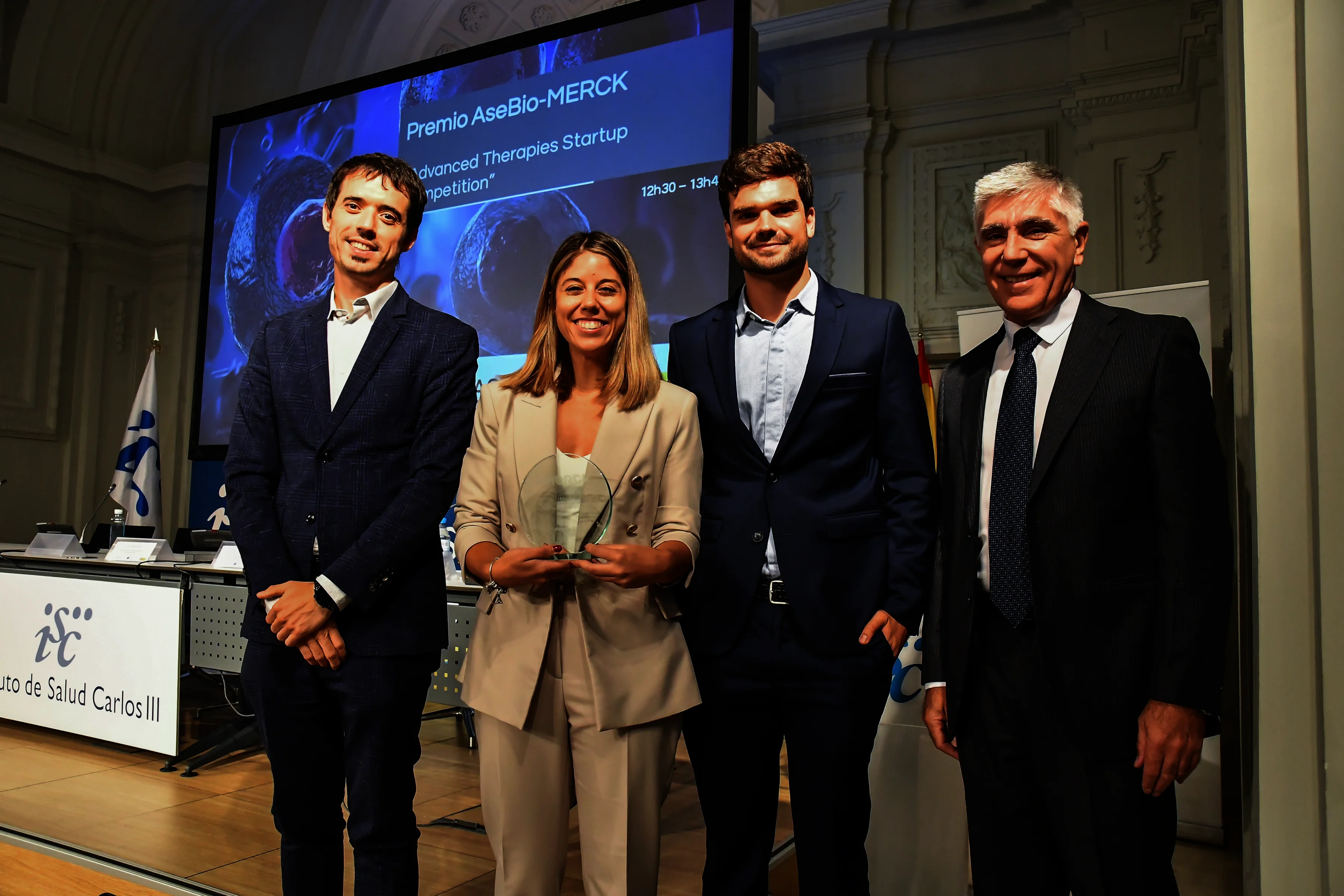
Photo 2: María Tristán with the members of the jury of the AseBio-Merck Award (Ion Arocena - AseBio, Iñigo de la Fuente and Enrique Berlanas - Merck).